



Written by:

Gillian O'Hanlon BL
Case Reporter
High Court: Company which sold same property twice fails to obtain security for its costs
 Reading time: 7 minutes
Written by:
Gillian O'Hanlon BL
Case Reporter
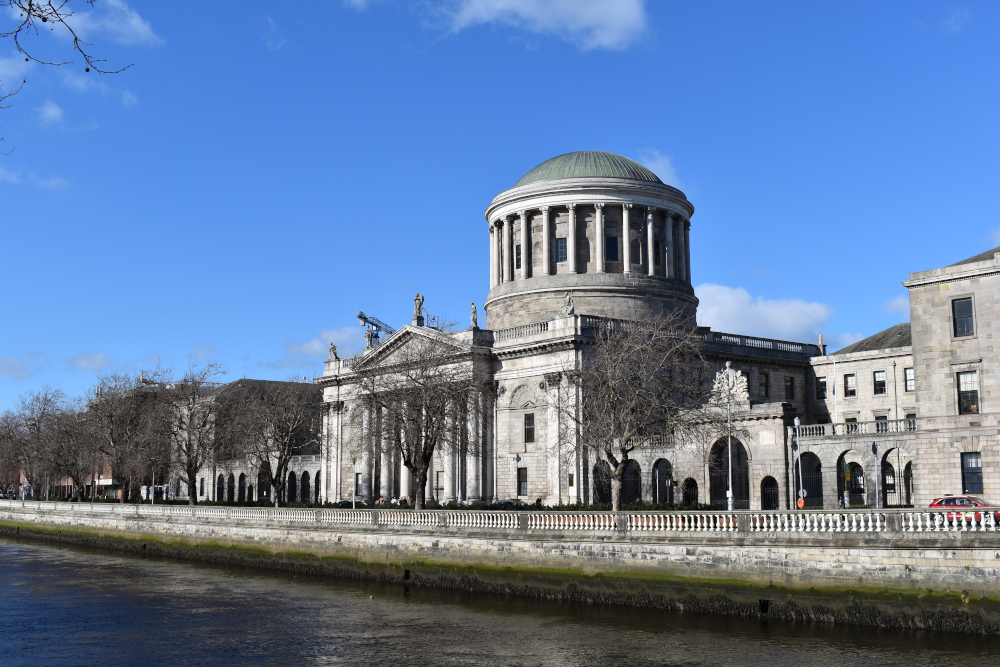
The High Court has refused an application for security for costs brought by a life assurance company which sold an investment property to a new purchaser in 2017, despite having already sold it to the plaintiff in 1991.

About this case:
- Citation:[2025] IEHC 667
- Judgment:
- Court:High Court
- Judge:Mr Justice David Nolan
Delivering judgment for the High Court, Mr Justice David Nolan reasoned: “The concept of there being no statute of limitations applicable to a bare trust or a constructive trust is a novel one. While I appreciate that before the Trustees Act of 1888, there was no Statute of Limitations, the whole purpose of the 1957 Act, was to put in place, on public policy grounds, a regime which put a time period or time bar on litigation.”
Background
On 31 October 1991, the plaintiff purchased a property in Bride Street, Dublin for £78,000.
Although the defendant subsequently executed a deed of transfer, the plaintiff failed to register its interest in the property with the Land Registry, with the result that the defendant remained as the legal owner of the property.
In 2017, the defendant was approached by a different company to see if it was interested in selling the property. Having agreed to sell the same property again for over €2.5 million, the defendant executed a further deed of transfer in favour of the purchaser on 2 November 2017.
In 2022, the purchaser sold the property again for over €3 million.
The plaintiff realised that the property had been sold again in 2022, when its director became aware that a planning application had been lodged for a hotel development in an adjoining property and discovered that it included the property the plaintiff had purchased in 1991. The explanation given for the oversight on part of the defendant involved a change of its personnel and information systems during the relevant period.
The plaintiff eventually issued proceedings in July 2024 claiming that it held an equitable beneficial interest in the property and that the defendant, in breach of trust, had sold the property twice and wrongfully continued to retain the proceeds of sale.
The defendant claimed that the plaintiff’s claim was statute-barred and that if the plaintiff’s cause of action existed, it accrued no later than 2017 and was now out of time.
The defendant subsequently brought an application for security for its costs against the plaintiff.
The High Court
Mr Justice Nolan recognised that the primary issue between the parties was the interpretation of sections 43 and 44 of the Statute of Limitations 1957.
The judge summarised that section 43 provides for a limitation period of six years against trustees, with the cause of action not being deemed to accrue until the interest in question falls into possession, and that section 44 excludes from the limitation period actions against trustees in cases of fraud or retention of trust property.
The court confirmed that both Order 29 Rule 3 of the Rules of the Superior Courts and the court’s inherent jurisdiction, by analogy with s.52 of the Companies Act 2014, applied where the plaintiff was resident outside the jurisdiction and where the principles of the 2014 Act relate to companies registered outside the jurisdiction as well as inside the jurisdiction.
Noting that on an application for security for costs it is not the role of the court to determine with finality the likelihood of success or otherwise of the defendant’s defence, rather it must determine whether a prima facie defence is advanced, Mr Justice Nolan was satisfied that a trust relationship arose by implication of law to protect the plaintiff.
The court then considered the definition of trustee under s.2(2)(a)(i) of the Statute of Limitations, finding that the term “trustee” does not include a person whose fiduciary relationship arises merely by construction or by implication of law and that sections 43 and 44 were inapplicable.
Mr Justice Nolan considered the respective positions of the parties, noting the defendant’s contention that where the trust was not determined by statute, it either became a cause of action akin to any other or the law relating to laches applied, and so the Statute of Limitations applied.
The judge also had regard to the plaintiff’s contention that there was simply no limitation period applicable and that in those circumstances, the defendant could not have a prima facie defence to the claim.
Mr Justice Nolan opined:
“The concept of there being no statute of limitations applicable to a bare trust or a constructive trust is a novel one. While I appreciate that before the Trustees Act of 1888, there was no Statute of Limitations, the whole purpose of the 1957 Act, was to put in place, on public policy grounds, a regime which put a time period or time bar on litigation.”
The judge continued: “The Act specifically dealt with situations of fraud or fraudulent behaviour, which does not apply in this case. But the idea that in a perfectly ordinary non fraudulent matter, involving a bare trust or a constructive trust, that there would be no statute of limitations, seems to me at this remove, to be unlikely.”
The High Court found strength in the argument on behalf of the defendant that it would be ironic if an express trust benefitted from the defence of the Statute of Limitations, but no such defence existed for constructive trustees not falling within the definition of “trustee”.
Having found that the defendant had demonstrated a prima facie defence, the court then considered whether the plaintiff would be in a position to meet an award of costs if it were to lose the action.
Having regard to an affidavit tendered on behalf of the plaintiff, Mr Justice Nolan was satisfied that the plaintiff did not have sufficient assets to provide full security for costs, estimated at nearly €400,000 including VAT.
The judge then considered whether any special circumstances would tip the balance toward the refusal of the application, noting the plaintiff’s allegation that its impecuniosity was due to the actions of the defendant since the plaintiff’s sole purpose, as a special purpose vehicle, was to hold the property.
The court examined the test set out in Connaughton Road Construction Ltd v Laing O’Rourke Ireland Ltd [2009] IEHC 7, finding that the issue of whether the proceedings would be “stifled” by the making of an order for security for the defendant’s costs did not have to be considered if the plaintiff came within the Connaughton Road criteria.
Mr Justice Nolan was satisfied that the plaintiff had established, on a prima facie basis, that there was actionable wrongdoing on part of the defendant, that a causal connection between that wrongdoing and the plaintiff’s loss existed which was easily calculable as the sale price in 2017, and that the loss was sufficient to make the difference between the plaintiff being in a position to meet the defendant’s costs and the point of not being in such a position.
The judge concluded: “I am satisfied the balance has been tipped where it could be shown that rather than the alleged wrongdoing only forming part of the shortfall giving rise to the financial difficulties the plaintiff is in, it is arguable that it forms all of it.”
Conclusion
Accordingly, the High Court refused the defendant’s application.
Good Hope Investments Limited v New Ireland Assurance Company PLC [2025] IEHC 667

Share this article:

Subscribe to our newsletter to not miss articles like this one:
 SUBSCRIBE