




Written by:

Gillian O'Hanlon BL
Case Reporter
High Court: Challenge to planning exemption for Dublin 4 office conversion fails
 Reading time: 7 minutes
Written by:
Gillian O'Hanlon BL
Case Reporter
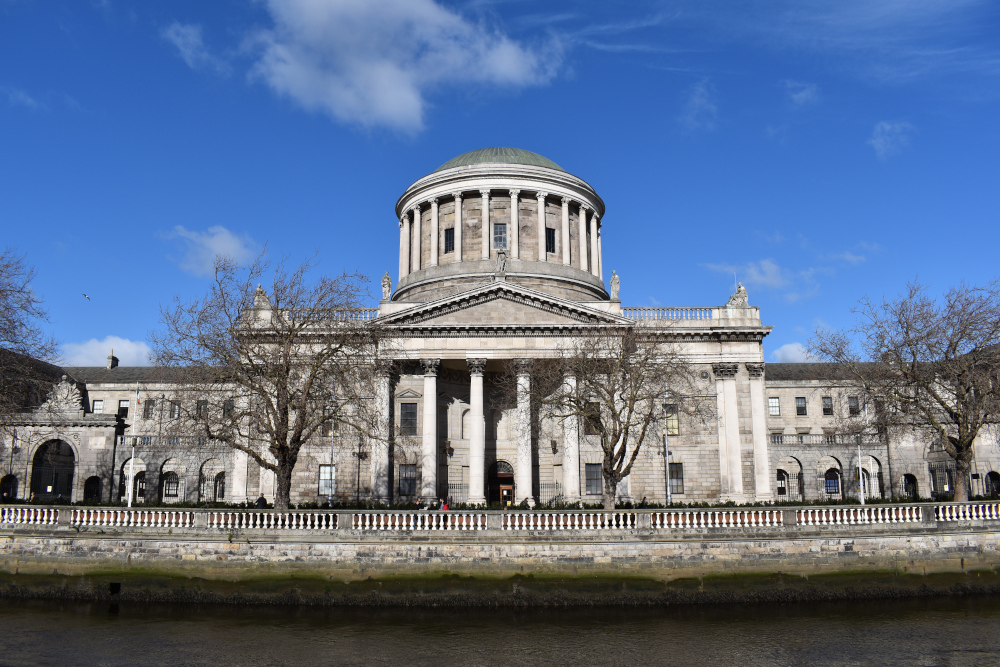
The High Court has dismissed a challenge to a declaration exempting from planning permission the conversion of a Dublin 4 office into temporary accommodation for international protection applicants.

About this case:
- Citation:[2026] IEHC 786
- Judgment:
- Court:High Court
- Judge:Mr Justice Michael Conlon
Delivering judgment for the High Court, Mr Justice Michael Conlon found that no evidence had been advanced which would have required “appropriate assessment” by Dublin City Council, that no breach of the Aarhus Convention or EU law had occurred, and that there was no unlawfulness or irrationality in the regulations providing for the exemption in question.
Background
Capital Scheme Unlimited Company, the notice party, sought to use a 3-storey office building, Merrion House, Dublin 4, to temporarily accommodate persons seeking international protection.
The site was zoned “Z10” under the Dublin City Development Plan 2022 - 2028 with the objective of consolidating and facilitating the development of inner city and inner suburban sites for mixed uses.
In October 2024, the notice party applied to Dublin City Council (DCC) for a declaration pursuant to s.5 of the Planning and Development Act 2000 (as amended) (PDA) as to whether the proposed change of use of Merrion House from office use to temporary accommodation for persons seeking international protection under the Planning and Development (Exempted Development) (No. 4) Regulations 2023, S.I. No. 376/2023 would be an exempted development.
The 2023 Regulations amended the Planning and Development Regulations 2001 (PDRs) by creating a new class of exempted development, permitting the temporary use of certain existing buildings such as offices to accommodate displaced persons and those seeking international protection.
On 4 November 2024, DCC issued a declaration that the proposed development was an exempted development as per Class 20F, Part 1, Schedule 2 of the PDRs.
The exempted development process was not accessible to the public.
The applicant, an environmental activist, challenged that declaration and the lawfulness of the 2023 Regulations.
The High Court
Mr Justice Conlon outlined that there were three issues requiring determination: whether DCC was required to screen for “appropriate assessment” (AA) or to make and record a determination as to whether AA screening was required before issuing its decision; whether the process by which the s.5 declaration was made breached the Aarhus Convention so as to render the decision contrary to EU law; and whether the making of the 2023 Regulations was unlawful or irrational.
The court considered two comparator sites advanced by the applicant.
The first was an application by Soundvale Limited for planning permission for the construction of a five-storey building neighbouring Merrion House, which underwent AA screening, Natura Impact Statement assessment and environmental scrutiny due to its location on a greenfield site with ecological links to European sites.
The court highlighted that Merrion House involved only a change of use within an existing office building, rather than an application for planning permission.
The second comparator was Dundrum House, a hotel intended to be used for accommodation for asylum seekers. A s.5 referral was made and AA screening was conducted, wastewater capacity was examined, and ultimately, it was determined that the development was not exempted development.
The notice party highlighted that the decision in that case turned on site-specific wastewater, planning history and environmental considerations which were absent at Merrion House, such as the reliance of Dundrum House on an on-site wastewater treatment system discharging into the River Multeen within the Lower River Suir Special Area of Conservation.
As to the first issue, Mr Justice Conlon outlined inter alia s.177U(9) of the PDA which states that “In deciding upon a declaration or a referral under section 5 of this Act a planning authority or the Board, as the case may be, shall where appropriate, conduct a screening for appropriate assessment in accordance with the provisions of this section.”
Noting the requirement in s.5(2)(a) of the PDA for the planning authority to provide the “main reasons” for its decision, the court recognised that there was no reference to any of the fifteen potential de-exempting provisions in Article 9, including whether the development was one which would require an AA because it would be likely to have a significant effect on the integrity of a European site as per Article 9(1)(a)(viiB) of the PDRs.
Highlighting that the caselaw made it clear that the need for reasons is context specific, the judge noted that there will be cases where consideration under s.177U(9) and/or the fifteen potential de-exemptions “will need to be set out expressly in a section 5 decision. But in my view, this is not one of them. That is essentially because, in my view, there was no admissible evidence of a likelihood of any problem because of the proposed change of use.”
The court further highlighted that mere proximity to a European site was insufficient on its own to require AA screening.
Turning to the second issue, the court was advised that unlike the process for applying for planning permission under the PDA, the process for seeking a declaration of exempted development under s.5, does not provide for public participation.
Mr Justice Conlon considered Carvill and Anor v Dublin City Council [2025] IECA 84, which clarified that under Article 6(3) of the Habitats Directive there is a right to public participation in respect of a plan or project likely to have a significant effect on the environment for the stage 2 AA “if appropriate”, but not for the screening stage.
In circumstances where the evidence before the court did not provide any basis for considering a need for AA screening and did not engage Article 6(3) of the Habitats Directive, Mr Justice Conlon was satisfied that the applicant’s argument on this point fell away and so the court refused to make a reference to the Court of Justice of the European Union (CJEU).
Moving to consider the third issue, Mr Justice Conlon rejected the applicant’s challenge to the making of the 2023 Regulations as unlawful or irrational.
Firstly, the judge explained that s.4(2) of the PDA expressly authorised the Minister to create classes of exempted development.
Secondly, the court outlined that questions of proper planning and sustainable development require consideration when the Minister is making the regulations and in doing so, he said that he was “…of the opinion that development to which the following regulations apply would not offend against principles of proper planning and sustainable development by reason of the nature and limited effect…”
Highlighting that the words “nature” and “limited effect” in the recital reflected the language of s.4(2), Mr Justice Conlon was further satisfied that while any class or category-based exemption must have a level of generality, Class 20F was limited in important ways concerning inter alia temporary uses in existing buildings only.
The judge also considered that s.4(4) and Article 9 of the PDRs prevent over-breadth of categories, with s.4(4) stating that a development is not exempted if an environmental impact assessment or AA is required, and pointed out that the irrationality argument was unsupported by evidence as no planning or expert evidence had been advanced demonstrating that the class of development was incapable of satisfying proper planning and sustainable development principles.
Conclusion
Accordingly, the High Court found on the first issue that DCC was not required to carry out AA screening or to record a determination as to whether AA screening was required before issuing the s.5 declaration.
On the second issue, the court determined that the applicant had not established that the process leading to the impugned decision was unlawful for breach of the Aarhus Convention or EU law.
As to the final issue, the court decided that the applicant had not established that the making of the 2023 Regulations was unlawful or irrational.
Conway v Dublin City Council & Ors [2026] IEHC 786

Share this article:

Subscribe to our newsletter to not miss articles like this one:
 SUBSCRIBE

