





Written by:

Gillian O'Hanlon BL
Case Reporter
High Court: Attempt to quash assault conviction dismissed
 Reading time: 6 minutes
Written by:
Gillian O'Hanlon BL
Case Reporter
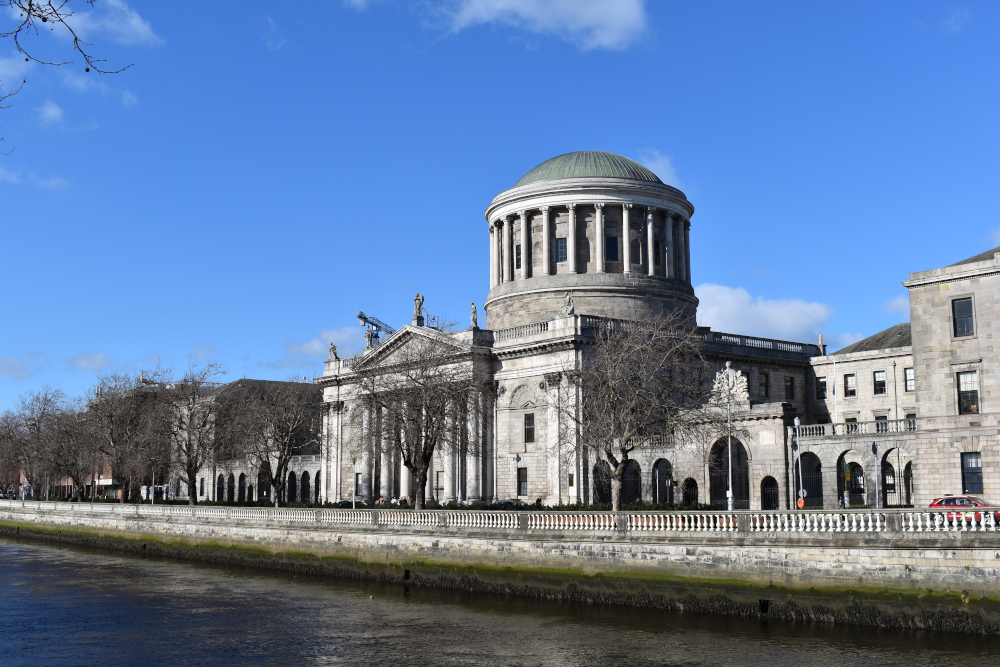
The High Court has refused to quash the conviction of a man who threatened an entrant onto lands sold by receiver.

About this case:
- Citation:[2026] IEHC 633
- Judgment:
- Court:High Court
- Judge:Mr Justice Barry O'Donnell
Delivering judgment for the High Court, Mr Justice Barry O’ Donnell opined, “The respondent appears correct in its assertion that, viewed properly, this was an attempt to cloak a disagreement with the findings of the Circuit Court as a legal challenge by way of judicial review.”
Background
The applicant was employed in his family business operating in sand, gravel and quarries. The applicant alleged that, in exchange for his foregoing wages for several years, there was a verbal agreement to the effect that he would be entitled to ownership of Ballyburn House, a second adjoining house and 10 acres of land.
In 2014, a receiver was appointed over the family business and sought to sell lands owned by the family business, resulting in the applicant being served with an eviction notice, which he challenged unsuccessfully.
A company, Sugar Beet Ireland, purchased lands from the receiver and in January 2018, an incident unfolded when persons connected to Sugar Beet Ireland, attempted to enter onto the lands.
The applicant tried to prevent the vehicles from entering onto the lands by standing behind them whilst they were reversing, resulting in the applicant allegedly ending up “under the back axle” of a truck.
In the course of a further incident in April 2018, the applicant found a security contractor, Mr Doyle, sitting in a vehicle at a disused quarry pit on the lands.
Mr Doyle claimed that the applicant approached him aggressively and disoriented him light from with a powerful lamp, threatening to shoot him. Mr Doyle’s position was that his wife had dropped him to the site in the vehicle present on the lands.
Gardaí arrived on site and the applicant was brought to Athy Garda Station where he was arrested and charged with, inter alia, assault. The applicant was convicted in the District Court and appealed to the Circuit Court, which upheld his conviction.
The applicant sought, by way of judicial review, an order quashing his conviction along with declaratory relief to the effect that he did not receive a fair trial. The applicant further sought an extension of time for the bringing of judicial review proceedings.
Grounds of challenge
The applicant complained that there was a breach of fair procedures in that his application to adjourn the prosecution of his Circuit Court appeal an hour into his trial was refused.
The applicant further argued that the prosecution ought to have obtained statements from Mr Doyle’s wife and father-in-law. The applicant’s position was that if Mr Doyle’s statement about how he arrived at the site was impugned, it would have undermined Mr Doyle’s credibility.
The applicant further contended that he had not been provided with Garda witness statements and could not challenge the lawfulness of his arrest.
An additional line of challenge focused on a comment by the Circuit Court judge, who noted that the defence could have issued subpoenas for the witnesses sought and that the State could not be criticised for not having those individuals in court. In that respect, the applicant contended that without witness statements, he could not have called the witnesses as he did not know what they would say and could not challenge inconsistencies with their previous statements.
Finally, the applicant suggested that there was a failure to investigate inter alia his complaints of trespass and forcible entry onto the Ballyburn site.
The High Court
Having set out the relevant legal principles, Mr Justice O’ Donnell turned to the application for an extension of time within which to bring judicial review proceedings.
Finding that the application was out of time by a period of 5 days and that the applicant was “clearly cognisant of the issue of time” where his statement of grounds expressly sought an extension, the judge observed that no explanation for the delay or any argument as to why the application ought to be acceded to had been advanced.
The court considered, contrary to the contention of the application, that a change in the previous “stop the clock” procedure for judicial review applications was not of detriment to the applicant and that under the old system, he would still have been required to bring the “stop the clock” application in any event.
Refusing the extension of time, the court expressed that it was nonetheless satisfied that this was not an appropriate case for a grant of relief.
As to the fair procedures grounds, the Mr Justice O’ Donnell identified two major difficulties faced by the applicant.
Firstly, the judge considered that the discretion to consider an adjournment is quite broad and that the trial judge had made clear that the adjournment application was brought at an inappropriate juncture of the proceedings, after the applicant’s counsel had acknowledged that the matter was ready to proceed.
Observing that the only development in the proceedings to that point had been an agreement on part of the prosecution not to pursue one of the charges against the applicant, the judge opined “In those premises it is not at all clear what new development would have justified an adjournment at that point in the trial.”
As to the balance of the applicant’s arguments, the court did not accept the contention that DPP v. S.Q. [2023] IESC 8 was authority for the proposition that Gardaí have a heightened duty toward requests raised by litigants in person.
Noting that the applicant was able to secure the attendance of witnesses if he considered that necessary, the court was satisfied that the “investigative obligation of gardaí is not absolute and it is not the case that by failing to obtain statements from Mr. Doyle’s wife and father-in-law, that this evidence was in any way lost to the applicant.”
The court found the absence of any legal argument on behalf of the applicant connecting the alleged failures to investigate to the asserted unfairness of the trial “telling”, agreeing with the respondent that “this was an attempt to cloak a disagreement with the findings of the Circuit Court as a legal challenge by way of judicial review.”
Conclusion
Accordingly, the High Court refused the application.
Philip Morrissey Junior v The Director of Public Prosecutions & Ors [2026] IEHC 633

Share this article:

Subscribe to our newsletter to not miss articles like this one:
 SUBSCRIBE

