


Written by:

Gillian O'Hanlon BL
Case Reporter
High Court: Application to strike out solicitor professional negligence claim dismissed
 Reading time: 6 minutes
Written by:
Gillian O'Hanlon BL
Case Reporter
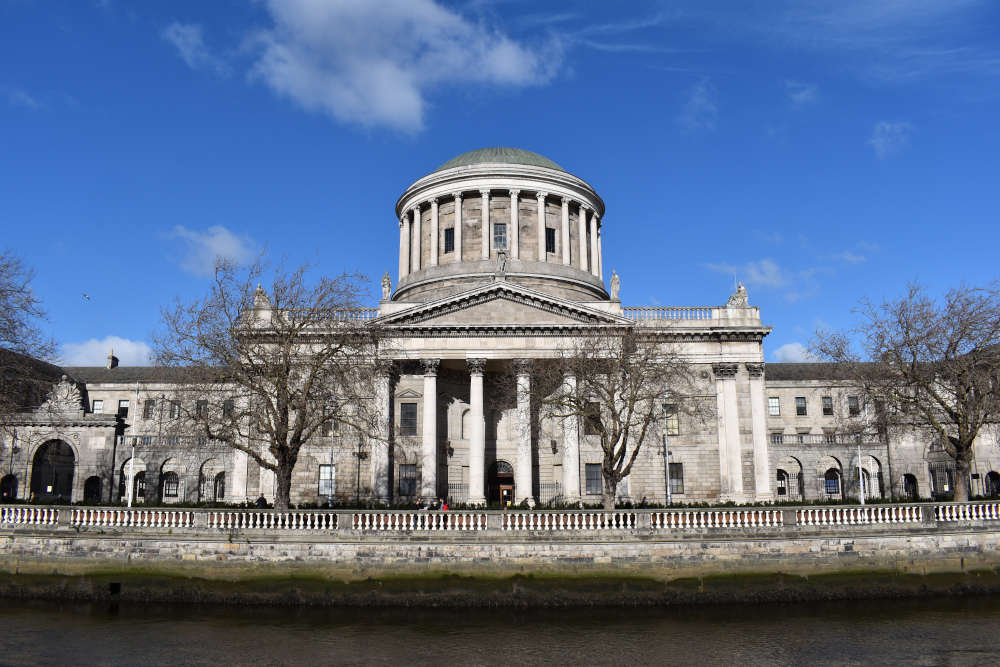
The High Court has refused to strike out a professional negligence claim against the former partner of a dissolved firm of solicitors.

About this case:
- Citation:[2026] IEHC 620
- Judgment:
- Court:High Court
- Judge:Mr Justice Barry O'Donnell
Delivering judgment for the High Court, Mr Justice Barry O’ Donnell opined, “I consider that the plaintiffs’ claim has the appearance of weakness but that it should be permitted to proceed. It may well be that further material will be disclosed as part of the discovery process, and it seems to me that a trial court will be in a far better position to resolve the claims with the benefit of oral evidence.”
Background
In 1996, the first plaintiff purchased a property at 10 Glenmalure Court, Dublin 8 with his now deceased brother (the father of the second plaintiff).
The plaintiff and his brother were registered as joint tenants over the property, meaning if either purchaser died, any transfer of their half share of the property to their successors would require a further conveyance from the surviving purchaser and a tax liability would arise.
The plaintiffs alleged that the property should have been conveyed as tenants in common as it was intended as an investment, meaning that in the event of either purchaser’s death, their share would pass in accordance with their will.
The conveyance was handled by Finbar Cahill & Company, of which the defendant was a partner.
In April 2023, the plaintiffs sued the defendant trading under the style and title of Martin Moran & Company for professional negligence, alleging that the defendant solicitor handled the conveyance, that the case-file had been transferred to the defendant’s practice, and that the defendant committed ongoing failures up to death of the plaintiff’s brother in 2017.
The defence raised a preliminary objection that the claim was statute-barred by effluxion of time and alleged that the plaintiffs were estopped from obtaining relief.
In particular, the defendant alleged that there was no privity of contract between the first plaintiff and the defendant as the conveyance was conducted by a now-deceased solicitor in Finbarr Cahill & Co, and that it was illogical that a firm could be liable for the acts or omissions of a firm which had been dissolved for two decades..
The defendant sought orders striking out the claim as being bound to fail, on the basis of the Statute of Limitations and on the basis that the defendant had been improperly joined as he did not conduct the conveyancing and his firm was not the correct defendant.
The High Court
Highlighting that the application was one pursuant to Order 19, rule 28 of the Rules of the Superior Courts, Mr Justice O’ Donnell had regard to Killeen v. Higgins [2025] IEHC 582 in which Mr Justice Garrett Simons stated that “A strike out application is viewed through a very different lens than the trial of a preliminary issue: the court does not engage at a granular level with the question of whether the proceedings are statute-barred with a view to final determination on the merits one way or the other…The court must consider whether there is a reasonable possibility that evidence – whether oral or documentary – might be forthcoming which would support the plaintiff’s answer to the plea.”
Finding that the passage was helpful in dealing with the limitation issue in the case but was also largely applicable to the other aspect of the defendant’s motion, the court explained that the defendant’s claim that he had no role in the transaction was simply not fully supported by the evidence.
Mr Justice O’ Donnell opined, “I do not agree that there is sufficient certainty to displace the pleaded claim that he conducted or bore some liability for the manner in which the conveyance was approached. In the premises, the court is not at all satisfied that there is a basis for striking out the claim on the basis that the defendant was not involved in the transaction, and this is a matter that ought to be resolved in a proper trial.”
As to the defendant’s allegation that his firm was incorrectly named as a party, the judge explained that this was not a basis for striking out the claim and could be resolved by a motion to amend the title to the proceedings.
Turning to the limitations issue, the court outlined that it needed to be satisfied with reasonable certainty that the claim was now statute-barred.
Mr Justice O’ Donnell considered the plaintiffs’ argument that no cause of action could accrue until one or other of the purchasers died, noting that this “would involve the cause of action accruing at some indefinite period in the future with the potential associated liability remaining in a form of suspended animation until that contingency transpired. It seems to me that this would introduce a level of uncertainty that is in opposition to the theory underlying the Statute of Limitations.”
Finding merit in the defendant’s argument that the cause of action accrued once the transaction was complete as the purchasers had then suffered damage in obtaining a title which did not reflect what they required and which was liable to a loss when one of them died, Mr Justice O’ Donnell pointed out that “despite that frailty in the plaintiffs’ case, their claim is not solely confined to the immediate transaction but also asserts a further number of particulars to the effect that there was an ongoing duty to remedy the title issue; and, while there is no formal plea invoking section 71 of the Statute, the plaintiffs assert that the defendant had claimed that the mortgage provider had insisted that the property be held as a joint tenancy.”
Explaining that the court needed to be satisfied that there was no reasonable possibility of the plaintiffs being able to respond to the plea that the claim is statute-barred and finding that while the plaintiffs’ claim had the “appearance of weakness” but should be permitted to proceed, Mr Justice O’ Donnell determined that the trial court would be in a far better position to resolve the claims with the benefit of oral evidence.
Conclusion
Accordingly, the High Court refused the defendant’s application.
Kerr & Anor v Martin Moran trading under the style and title of Moran & Company Solicitors [2026] IEHC 620

Share this article:

Subscribe to our newsletter to not miss articles like this one:
 SUBSCRIBE