

EU ministers agree stronger action on migration and security
 Reading time: 4 minutes
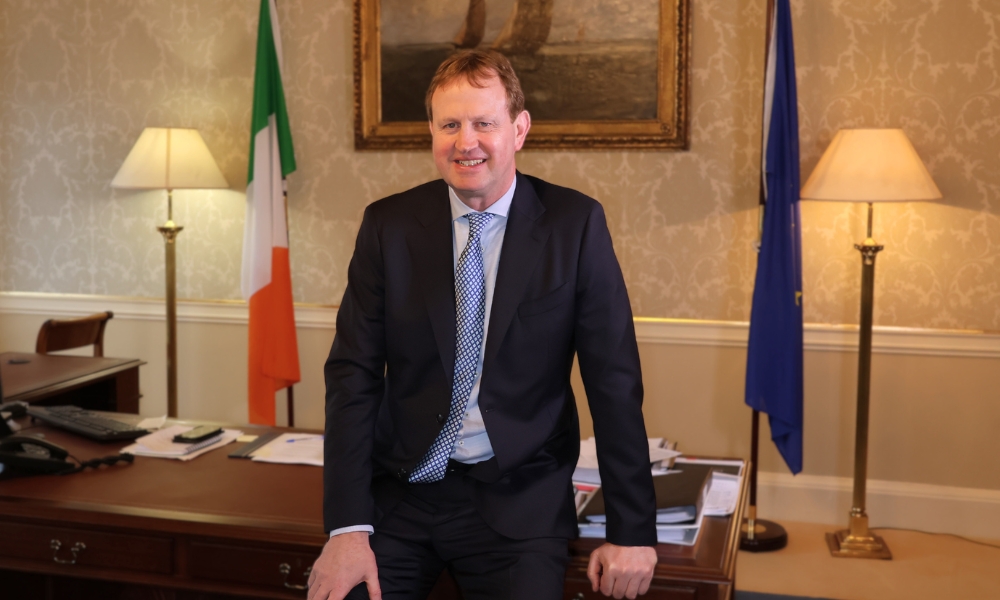
Jim O'Callaghan
Justice minister Jim O’Callaghan TD yesterday chaired a meeting of home affairs ministers as part of the two-day Justice and Home Affairs (JHA) Council with discussions on returns, migration preparedness and internal security.
Discussions tabled included a focus on the overall state of the Schengen area, improving returns through enhanced readmission cooperation with priority third countries, and improving the European Union’s early warning systems.
Commenting on the discussions on improving returns through enhanced readmission cooperation with priority third countries, the Mr O’Callaghan said: “Ensuring the timely and effective return of people with no right to stay in the EU is one of the main objectives of our comprehensive approach to migration management.
“Ireland, as Presidency, has proposed a more proactive role for home affairs ministers in monitoring the level of cooperation on returns of third countries whose nationals are most commonly refused asylum in the EU.
“The approach proposed by the Presidency, and agreed to by ministers, includes the EU using a wide range of tools to encourage greater cooperation on readmission. This could include aspects of visa policy, trade policy, development assistance as well as legal pathways.
“Taking this more proactive approach to improving the cooperation of third countries on returns is essential to the effective implementation of the Common European Asylum System”
Ministers also formally adopted the recently negotiated Returns Regulation.
Reflecting on the agreement of this measure, Mr O’Callaghan said: “Having a functioning returns system is a key part of ensuring we have a fair, firm, rules-based approach to migration, asylum and returns, and I welcome today’s formal agreement of the Returns Regulation which was seen as the missing piece of the Pact.”
Also on the topic of migration, ministers discussed a Presidency paper on how the EU might reinforce our situational awareness and early warning capabilities in the field of migration, including during crisis situations. Speaking on the importance of improving the Union’s ability to anticipate sudden movements, identify potential risks at an early stage and enable timely and informed action, Mr O’Callaghan said:“Effective crisis management requires moving beyond a reactive approach towards greater preparedness, anticipation and rapid action when needed.
“Improving the level and means of sharing relevant information and monitoring social media and making sure this is done in a complete and timely manner, will help us translate operational intelligence from EU Agencies and member states into timely and effective responses on the ground.”
Ministers were also updated on the implementation of the Pact on Migration and Asylum which came into force on 12 June. Commenting on the update, MRr O’Callaghan said: “The Pact on Migration and Asylum was a long time in the making, but the end result represents our dedication and commitment to having a common set of clear, coherent rules.
“In addition to now having a much more coherent and efficient system for dealing with asylum applications, we have seen the number of people applying for asylum across the EU, and also in Ireland, fall significantly.”
Over a working lunch, ministers discussed the impact of the current geopolitical environment on the EU’s internal security, including receiving a presentation from the Commissioner of An Garda Síochána Justin Kelly on the key issues facing the Union.
Commenting on these discussion, Mr O’Callaghan said: “The Irish Presidency is working across all areas of policy to advance measures contributing to the strengthening of European security. Russia’s ongoing war of aggression against Ukraine and broader geopolitical uncertainty have highlighted the need for Europe to invest in all dimensions of its own security, and this is an important area of focus for member states.”
Ministers also discussed the implementation of the EU’s drugs strategy framework, with a particular focus on tackling drug-related intimidation, and separately exchanged views on how to better leverage technology to secure the EUs external borders.

Share this article:

Subscribe to our newsletter to not miss articles like this one:
 SUBSCRIBE