

ECJ Advocate General sides with aviation authority in Dublin Airport passenger cap dispute
 Reading time: 2 minutes

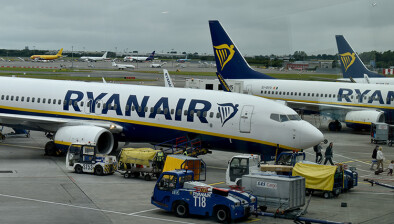
The Irish Aviation Authority (IAA) may take Dublin Airport’s 32 million passenger cap into account when allocating take-off and landing slots, an Advocate General of the European Court of Justice has said.
Advocate General Manuel Campos Sánchez-Bordona yesterday gave his opinion on questions referred to the Court of Justice of the European Union (CJEU) by the Irish High Court in December 2024.
A number of airlines as well as Dublin Airport operator daa launched the High Court proceedings after the IAA took action in winter 2024 and summer 2025 to ensure that the airport would remain within the passenger cap imposed by An Bord Pleanála in 2007.
The High Court has stayed the measures taken by the IAA pending the outcome of these legal proceedings.
The Irish government is currently legislating to give ministers the power to revoke or amend the cap, which airlines argue is now outdated.
In his opinion, which is not binding on the CJEU, Advocate General Campos Sánchez-Bordona said the 32 million passenger cap is an operational constraint, irrespective of it originating from a planning authority.
He also said “historical slots” are not property rights, but authorisation to use airport infrastructure, and that they cannot be granted in disregard of the airport’s capacity as defined in the coordination parameters.
A further question around the IAA’s power to order closure of the airport in order to comply with the passenger cap is inadmissible, he said.
However, if it is found by the court to be admissible, the Advocate General submits that closure would be excessively drastic and detrimental.
Ryanair, one of the applicant airlines in the High Court proceedings, has said it “fundamentally disagrees” with the Advocate General’s opinion and urged the government to now pass legislation on the issue as soon as possible.
“Ireland cannot wait until the end of the year for this legislation to be passed, as today’s Advocate General’s ruling [sic] may enable the IAA to reimpose this 32 million cap, which would not just stop Dublin Airport growing, but would require the existing airlines to reduce traffic by up to six million passengers annually to comply with this nonsensical 2007 32 million passenger cap,” CEO Michael O’Leary said.

Share this article:

Subscribe to our newsletter to not miss articles like this one:
 SUBSCRIBE