Written by:

Gillian O'Hanlon BL
Case Reporter
Court of Appeal: Participant in ‘gravest public disorder incident in the history of the State’ loses appeal
 Reading time: 7 minutes
Written by:
Gillian O'Hanlon BL
Case Reporter
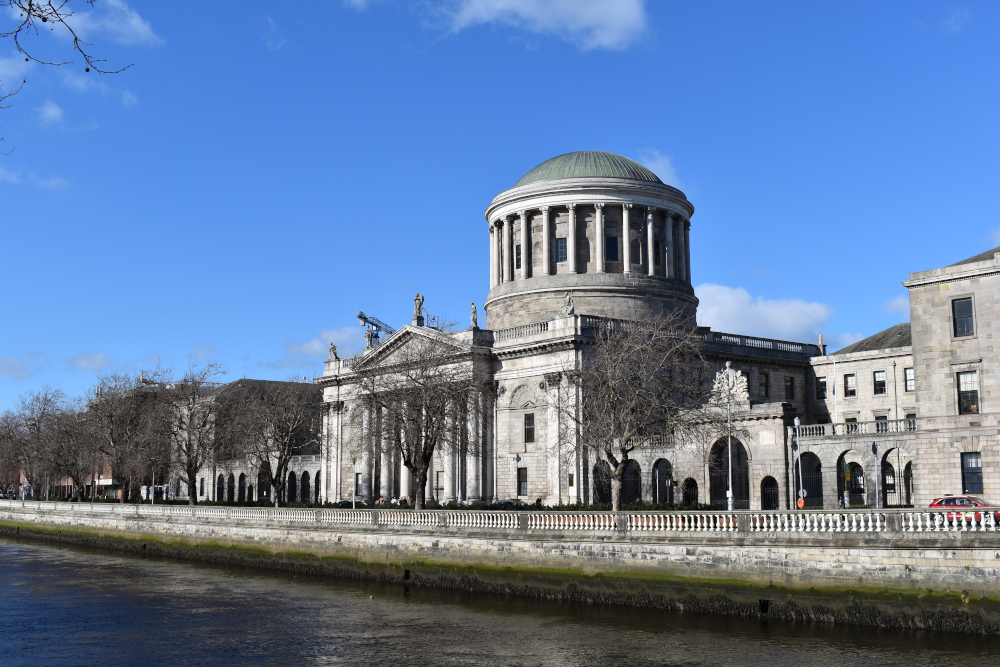
The Court of Appeal has upheld the sentence imposed on a participant in the “Dubin riots” who set a garda car alight and attacked a direct provision centre.

About this case:
- Citation:[2026] IECA 105
- Judgment:
- Court:Court of Appeal
- Judge:Ms Justice Nuala Butler
Delivering judgment for the Court of Appeal in May, Ms Justice Nuala Butler considered that the appellant’s offending involved two very significant aggravating features, the first being his “extremely frightening” attack on a garda patrol car and the “racially motivated nature” of his attack on a hostel housing international protection applicants.
Background
On 23 November 2023, a large group of people assembled at the O’Connell Street/Parnell Street area in Dublin city centre. The assembly was apparently in response to a serious incident which had occurred at a local school earlier that day, and the events of that evening became known as “the Dublin riots”.
The appellant was captured on CCTV, having been easily identified where initially, his face was uncovered and his hood was down. The appellant was recorded throwing rubbish bags at Gardaí, kicking and stamping on a garda patrol car and breaking its windscreen, then taking a burning cardboard box and placing it into a second patrol car, causing it to be set alight.
CCTV captured the appellant returning to the vehicle and wiping the door handle through which he had gained access to the vehicle, presumably to remove forensic evidence.
The appellant was also seen throwing a bicycle saddle at the window of a direct provision centre, Dublin City Dorms, where 90 international protection applicants were housed and where a large group had gathered shouting “get out”.
The appellant pleaded guilty to the offences of rioting, arson and criminal damage, having made admissions as to his involvement at interview with Gardaí following his arrest in January 2024. The appellant also admitted that his attack on the direct provision centre was racially-motivated.
The appellant was convicted of all three offences, with two further counts of violent disorder and criminal damage being taken into consideration at sentencing.
At sentencing in November 2024, the judge considered as aggravating factors inter alia that the appellant was the sole offender involved in burning the patrol car, and that garda property and an international protection centre had been damaged.
The judge also had regard to inter alia the appellant’s admissions to Gardaí, his personal circumstances, his early guilty plea, his expression of remorse and his involvement in a local football club as mitigating factors.
The sentencing judge nominated a headline sentence of six years’ imprisonment for rioting, 10 years for arson and four years for criminal damage, reduced to 4.5 years, 7.5 years with the final year suspended, and three years respectively, in light of the mitigating factors. All sentences were to run concurrently.
The appellant appealed, arguing that because the headline sentence of 10 years for arson was too high, the ultimate result was disproportionate in comparison to other sentences imposed in arson cases and the sentences imposed on other participants in the Dublin riots for similar actions.
While the appellant accepted that the arson was very serious, he contested the placement of his offending in the ‘most serious’ category for sentencing as per DPP v Shannon [2023] IECA 325, distinguishing his offending from cases featuring significant planning and premeditation.
The appellant also highlighted media reports of the sentences imposed on other participants in the Dublin riots, noting that his headline sentence was disproportionately high in comparison.
The respondent disputed that a “discernible trend” had been identified by the appellant and asserted that his case was unique, involving a different level of culpability than the comparator cases.
The Court of Appeal
Ms Justice Butler considered that the context of the appellant’s offending was unique, in that it took place as part of what was “rightly described” as the “gravest public disorder incident in the history of the State”.
Noting that the case involved two very significant aggravating features, the first being the targeted attack on Gardaí who were attempting to investigate the serious offence committed earlier that day, Ms Justice Butler remarked that members of An Garda Síochána “when they go to work, and even when that work is difficult and must be carried out in circumstances where people are distressed and tensions are high, should not have to fear for their own personal safety.”
The court recounted that one Garda had remained with three garda vehicles whilst his colleagues were deployed in the crowd, leading the crowd to turn on that member who for his own safety had to retreat into a parked garda van. The appellant then set one of the vehicles immediately parked in front of that van alight, “undoubtedly an extremely frightening incident for the Garda involved and indeed for those of his colleagues who had to return in an attempt to rescue him.”
The second significant aggravating factor was identified as being the racially-motivated nature of the appellant’s actions and of the riots themselves, with the court highlighting that “Suspicion that a criminal act has been carried out by a member of a minority group can never justify a concerted attack on other members of that group.”
In that regard, Ms Justice Butler explained: “To find themselves barricaded into the hostel in which they were living with the shutters pulled down and the lights switched off to deflect attention whilst a mob outside chanted racist slogans and threw objects at the windows must have been a terrifying experience.”
The court accepted the DPP’s characterisation of the appellant’s actions as signifying a change in the level and type of violence carried out, with his act of arson being the first such act of the evening, representing a marked escalation.
In the circumstances, Ms Justice Butler found that the comparator cases relied upon by the appellant to be of limited value, considering that the appellant’s actions were premeditated in the sense that having been in the area an hours earlier, the appellant returned with his face covered and was obviously intending to participate in some form in the unfolding events.
The court also emphasised that the appellant took steps to remove his fingerprints and other trace evidence from the burning garda car, recognising that “These actions were not simply opportunistic and impulsive.”
Being unconvinced by the appellant’s reliance upon the sentences imposed on others involved in the Dublin riots specifically, Ms Justice Butler acknowledged that while the context in which all offending took place in the Dublin riots was broadly similar, different considerations apply to each individual case and to each individual offender.
The judge pointed out that in appeals against severity of sentence, the issue is not whether the court might have imposed a different sentence, but whether there was an error in principle in the sentence imposed.
Being satisfied that the sentencing judge had not erred in principle where the offending was clearly of a very serious kind, and where she had taken account of all positive factors listed on the appellant’s behalf and had applied a discount of 35% to the headline sentence, the Court of Appeal refused to find that the sentence imposed was disproportionate.
Conclusion
Accordingly, the Court of Appeal dismissed the appeal.
Director of Public Prosecutions v Declan Donaghey [2026] IECA 105

Share this article:

Subscribe to our newsletter to not miss articles like this one:
 SUBSCRIBE