

Written by:

Gillian O'Hanlon BL
Case Reporter
Court of Appeal: Ireland is the most appropriate forum for Ganley defamation cases
 Reading time: 7 minutes
Written by:
Gillian O'Hanlon BL
Case Reporter
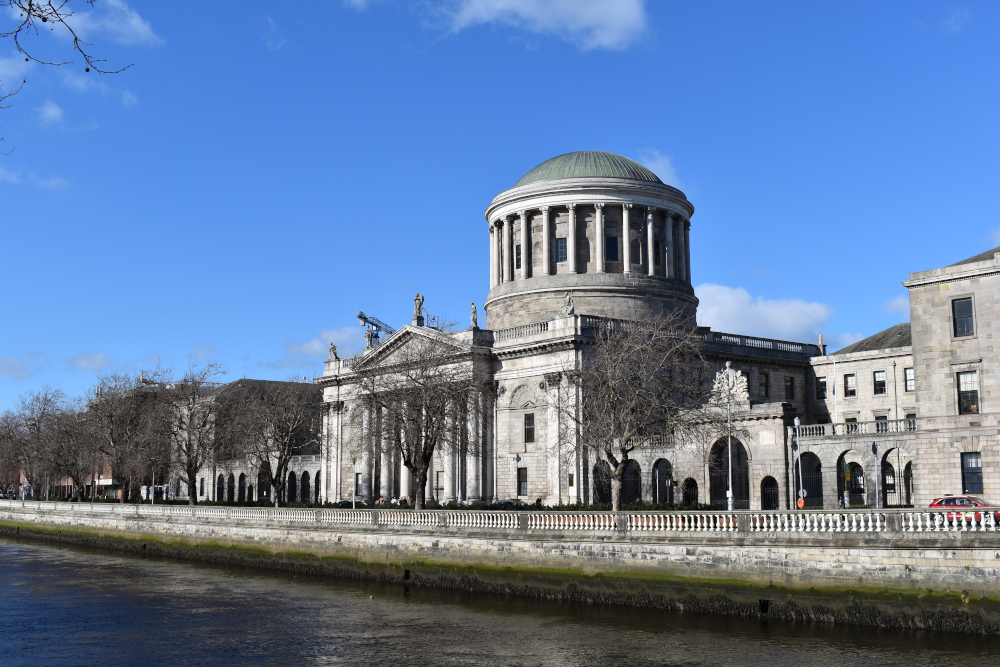
The Court of Appeal has upheld the decisions of the High Court finding that Ireland is the most appropriate forum for hearing Declan Ganley’s defamation proceedings and refusing to strike out the proceedings against two defendants.

About this case:
- Citation:[2026] IECA 33
- Judgment:
- Court:Court of Appeal
- Judge:Mr Justice Denis McDonald
Delivering judgment for the Court of Appeal, Mr Justice Denis McDonald considered that while the place in which the tort was committed is described in the case law as a “starting point”, “it will also, in many cases, prove to give the final answer on the question whether jurisdiction should be appropriately exercised”.
Background
The plaintiffs alleged defamation as against the defendants in relation to a news story published by CNN in October 2020, which suggested that the Trump administration pressured the US Department of Defence to award a lease of mid-band spectrum to an entity “Rivada”.
The plaintiffs argued that “Rivada” was a reference to a group of companies which included the second named plaintiff, an Irish-registered company, and which was associated with the first named plaintiff, businessman Mr Declan Ganley.
The defendants contended that the statement referred to a US-registered company, Rivada Networks Inc, but accepted that the article was published in Ireland for the purposes of the Defamation Act 2009 as it appeared on inter alia cnn.com and that the Irish courts had jurisdiction to hear the proceedings under Order 11(1)(f) of the Rules of the Superior Courts (RSC) where the action was founded on a tort allegedly committed within the jurisdiction.
Mr Justice Garrett Simons in the High Court refused to make an order setting aside service of the proceedings on the defendants who were outside the jurisdiction. The defendants brought that application on the basis that Ireland was a forum non conveniens and that the proceedings should have been brought in Washington DC, USA as the place with a greater connection to the events concerned.
The High Court also refused a further application on part of the second and third defendants seeking to dismiss the proceedings on the basis that the pleadings disclosed no reasonable cause of action against those defendants and that the claims were frivolous or vexatious.
The defendants appealed both decisions.
The Court of Appeal
Turning to the appeal against the refusal of the High Court to strike out the case against the second and third defendants, Mr Justice McDonald noted that as the relevant motion was issued prior to 22 September 2023, the application fell to be assessed under the version of Order 19, rule 28 RSC which existed prior to the enactment of the Rules of the Superior Courts (Order 19) 2023 (S.I. No. 456/2023).
The judge noted that it is “well settled that, under that version of the rule, the Court proceeds on the basis that the allegations made in the pleadings are true and no regard is had to additional evidence on affidavit”.
Finding that no attempt was made in the course of the defendants’ submissions to argue that the pleadings failed to disclose a cause of action against the second and third defendants, and having regard to the pleadings, Mr Justice McDonald reasoned: “I can see no basis on which it could be said, solely by reference to the pleadings, that the statement of claim does not disclose a cause of action against CNIL and Turner. It plainly does disclose a cause of action. It follows that Simons J. was entirely correct to reject this aspect of the defendants’ application.”
Moving on to consider the inherent jurisdiction of the court to strike out the claims, the judge was satisfied that the court was not confined to an examination of the pleadings and that affidavit evidence was admissible.
The court explained: “While the defendants have suggested that there is no evidence at all to support the plaintiffs’ case as to involvement by CNIL and Turner in the publications in issue, the position, even on their own evidence is, by no means, clear cut.”
Noting that the deponent on behalf of CNIL had admitted that its employees created content occasionally and that there was not a bright line division between the licensing aspects of Turner’s business and the programme creation aspects thereof, the Court of Appeal was not satisfied that the position was sufficiently clear to allow it to form the view that the plaintiffs’ claim was bound to fail.
As to a letter of 15 June 2021 which the second and third defendants alleged to show the plaintiffs’ willingness to “barter away” the joinder of those defendants to the proceedings in exchange for the defendants dropping their jurisdictional challenge, Mr Justice McDonald opined: “It seems to me that the letter is equally capable of being interpreted as a perfectly rational litigation offer in circumstances where the Speech Act was being relied on by CNN. If CNN did not seek to rely on the Speech Act and if it agreed to submit to the jurisdiction, the need to pursue the additional defendants would not arise.”
As to the jurisdictional issue, the Court of Appeal noted that the burden rested on the defendants to establish some error of assessment on part of Mr Justice Simons and that “In this case, it is clear that there was, uncharacteristically, an error on the part of the High Court judge” who concluded that in view of the particular circumstances of the case, it would be unjust to stay the proceedings.
Mr Justice McDonald highlighted: “Crucially, he did not separately address the anterior question as to whether the courts of Ireland or the relevant courts of the United States are the more appropriate forum in which to hear and determine the claim. As the judgment of Clarke J. in the IBRC case makes clear, that is the first question that falls to be considered on an application of this kind. It is only where the court decides that question against a plaintiff that the second issue arises as to whether, notwithstanding a finding that a foreign court is the more appropriate forum, the justice of the case nonetheless requires that the case should proceed in this jurisdiction.”
Considering the issue as to the appropriate forum de novo, the Court of Appeal considered the evidence placed by the parties before the High Court, concluding that “there are obviously connecting factors with both the United States, on the one hand, and with Ireland, on the other”.
Mr Justice McDonald reasoned that it was “clear from the IBRC case that, in considering whether there is a forum which is clearly or distinctly more appropriate than Ireland, it is necessary to weigh in the balance the competing factors that point towards the respective fora in issue. That exercise must be carried out objectively. It is also essential to take the position of both sides into account.”
The judge opined that “it seems to me that the principal factors that weigh in favour of Ireland as the appropriate forum are the fact that the tort occurred here and the fact that, as a consequence, Irish law governs the tort. In this context, having regard to the way in which the tort of defamation is designed to protect reputation, I am of the view that the fact that the alleged tort occurred here (i.e. not just publication but the alleged causing of reputational damage here) is a weighty factor in favour of Ireland as the appropriate forum.”
Having regard to the competing factors, such as the possibility of US-based witnesses, the impugned publications having focussed predominantly on events alleged to have taken place in the US, and the public interest in revealing the story also being most relevant in the US, the court nonetheless concluded that Ireland was “clearly and distinctly” the more appropriate forum.
In those circumstances, the court considered it unnecessary to consider the second issue as to whether justice demands that the proceedings be tried in this jurisdiction, noting: “As Clarke J. made clear, that issue only arises if it is determined that a foreign court is clearly and distinctly a more appropriate forum than Ireland.”
Conclusion
Accordingly, the Court of Appeal dismissed the appeals.
Declan Ganley and Rivada Networks Ltd v Cable News Network Inc & Ors [2026] IECA 33

Share this article:

Subscribe to our newsletter to not miss articles like this one:
 SUBSCRIBE