


Written by:

Gillian O'Hanlon BL
Case Reporter
Court of Appeal: Flatley fails in appeal against €1.1 million security for costs order
 Reading time: 7 minutes
Written by:
Gillian O'Hanlon BL
Case Reporter
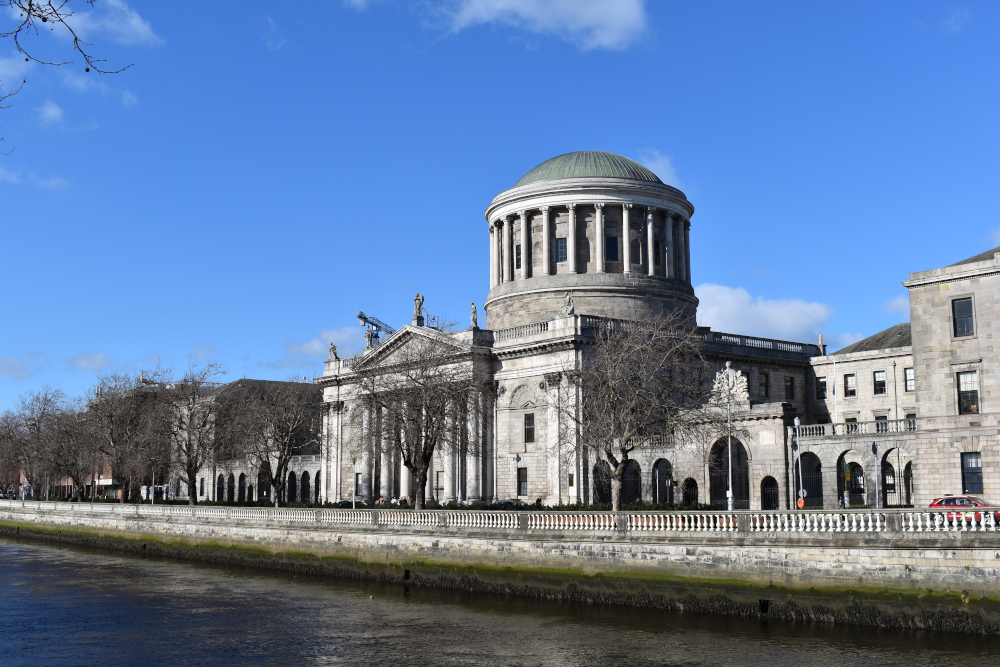
The Court of Appeal has dismissed dancer Michael Flatley’s appeal from a €1.1 million security for costs order in €30 million defective works case.

About this case:
- Citation:[2026] IECA 192
- Judgment:
- Court:Court of Appeal
- Judge:Mr Justice Senan Allen
Delivering judgment for the Court of Appeal, Mr Justice Senan Allen found inter alia that the High Court had “abundant justification” for departing from the usual “one third rule” for fixing security for costs, that the arguments in relation to the amount of security did not take into account the plaintiff’s equity in his Castlehyde property, and that on the plaintiff’s own case, the question of stifling his right of access to the court simply did not arise.
Background
The plaintiff, a famous dancer, entertainer and creator of “Lord of the Dance”, sued the defendants for, inter alia, allegedly negligent works carried out on his property at Castlehyde, Co. Cork.
Following the delivery of its judgments on 15 August 2025 and 14 November 2025, the High Court ordered that the plaintiff provide security for the first, third, fourth, fifth and seventh defendants’ costs in the amount of €1.1 million.
On appeal, the plaintiff argued that Ms Justice Eileen Roberts erred in finding that the defendants had adequately explained their delay in issuing their motions for security for costs such that the delay was not considered a special circumstance warranting refusal of the motions.
The plaintiff further alleged that the High Court failed to adequately consider his assets within the jurisdiction and failed to adequately consider whether ordering security for costs would stifle his access to the courts.
In the alternative, the plaintiff contended that the High Court erred in departing from the prevailing practice to fix the security at one third of the estimated costs for which the plaintiff was ordered to provide security.
The Court of Appeal
Having considered the parties’ submissions and the evidence which was before the High Court, Mr Justice Allen examined the plaintiff’s first ground of appeal.
Noting that at the time the question of security for costs was first raised the plaintiff was ordinarily resident in Monaco but had expressed his intention to move to Paris, the court pointed out that if the defendants were legally entitled to insist on security for costs unless and until he had moved, it would have made “no sense to contemplate that they would have issued their motions and run the risk of an adverse costs order if he in fact did move.”
In circumstances where the defendants had established that the plaintiff was ordinarily resident outside the jurisdiction and that they had a prima facie defence to his action, Mr Justice Allen explained that it would have been a matter for the plaintiff to demonstrate “special circumstances” to justify refusal of the order.
Highlighting that the plaintiff’s “most obvious prospect” of demonstrating special circumstances would have been to demonstrate that he had sufficient assets within the Irish jurisdiction, the court outlined that at the hearing of the appeal, it was submitted that the Lloyd’s defendants had not moved sooner as they were waiting to see what happened in proceedings attempting to force a sale of Castlehyde.
The court explained that “if Castlehyde was sold, any question of assets within the jurisdiction would evaporate. On the other hand, if – as it transpired – the Novellus loan was refinanced, there would likely be a row about the value of the equity of redemption. The defendants wanted to see what happened before they decided what to do.”
Finding that there was no delay on part of the defendants, the court moved to consider the plaintiff’s appeal in relation to the sufficiency of the High Court’s assessment of his assets within the jurisdiction.
As to the plaintiff’s suggestion that the rights to Lord of the Dance were valued at €198.6 million, the Court of Appeal recounted Ms Justice Robert’s unchallenged finding that “the value of Lord of the Dance was wherever the plaintiff was, and that the plaintiff was in Monaco: which put this asset out of the jurisdiction – and outside the EU and EEA.”
Accepting that the High Court had been critical of the plaintiff’s lack of methodology or formal calculation of the shares in Lord of the Dance, Mr Justice Allen was satisfied that its value was “a mere assertion unsupported by any explanation or by a shred of evidence.”
On the issue of the “Flatley Whiskey” business, the judge considered that the plaintiff’s assertion to the effect that he is the 100 per cent owner of the business did not “engage with the judge’s finding that the 100 per cent shareholder of Flatley Whiskey Limited was Flatley Whiskey (Holdings) Limited and that the registered 100 per cent shareholder in Flatley Whiskey (Holdings) Limited is Mr. Garvey.”
Concluding that the High Court had correctly determined that Flatley Whiskey was not an asset which could be taken into account in assessing the sufficiency of the plaintiff’s assets within the jurisdiction, Mr Justice Allen acknowledged that the “true focus” of the High Court was the valuation of Castlehyde.
The court outlined that Ms Justice Roberts had been presented with five valuations, only two of which were on affidavit, and that those two valuations had been properly taken into account by the High Court in ascribing to Castlehyde a value of €9.5 million, which, in light of the secured debt of €7.9 million, left insufficient equity to meet at adverse costs order.
As to the purported stifling of the plaintiff’s access to the courts by an order of security for costs, the Court of Appeal found that this argument had been dealt with succinctly by Ms Justice Roberts who pointed to the plaintiff’s own averment that it was “unnecessary to seek security for costs as [he] could pay costs” and that he is “… a man of means and a man of [his]word and able to pay costs.”
In respect of the argument that the High Court erred in fixing the amount of security at €1.1 million and should have fixed security at precisely one third of the estimated legal costs, Mr Justice Allen emphasised that “not for the first time, the figures are all over the place”
The judge observed that, beyond the plaintiff’s apparent miscalculation of the difference between the amount of security ordered and one third of the total estimate, “the arguments in relation to the amount of the security – in the High Court as well as on the appeal – did not take into account the equity in Castlehyde.”
Noting that Ms Justice Roberts had made clear that she was accounting in general terms for the existence of Castlehyde within the jurisdiction as well as the percentage of the costs estimates that should be secured, Mr Justice Allen considered that “To the extent that the judge departed from the one third starting point, she did so with a view to achieving a balance which reflected both the plaintiff’s ability to provide full security and the overall level of assets expected to be ultimately available to the defendants if they were successful.”
Conclusion
Finding “abundant justification” for the High Court’s departure from the “one third rule”, the Court of Appeal dismissed the appeal.
Michael Flatley v Austin Newport Group Limited & Ors [2026] IECA 192

Share this article:

Subscribe to our newsletter to not miss articles like this one:
 SUBSCRIBE