

Written by:

Gillian O'Hanlon BL
Case Reporter
Court of Appeal: Court opines on de minimis principle in clamping case
 Reading time: 6 minutes
Written by:
Gillian O'Hanlon BL
Case Reporter
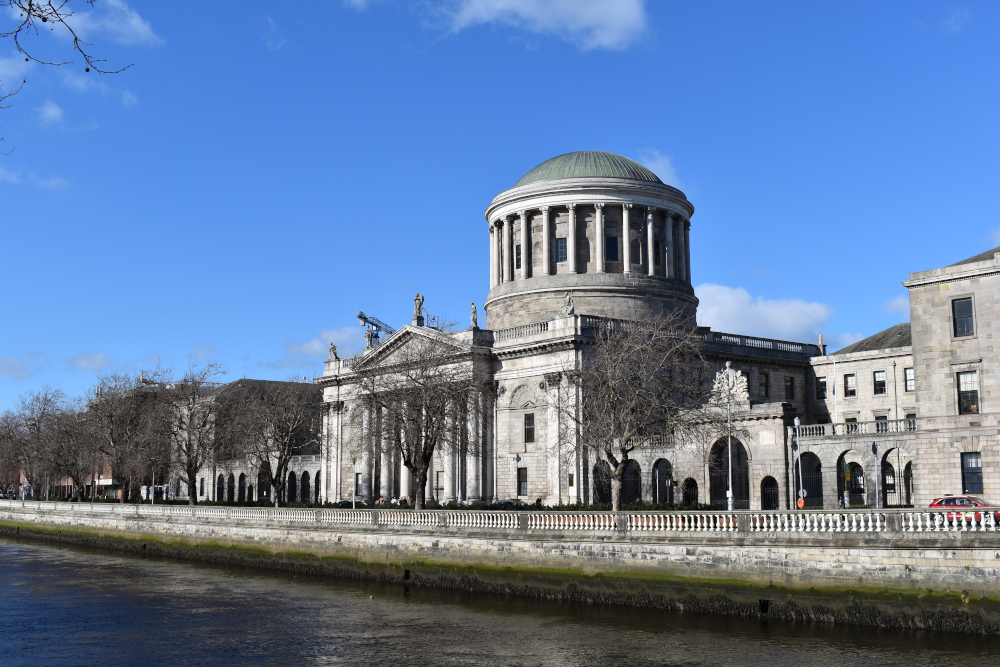
The Court of Appeal has determined that a technical point in a clamping case met the threshold of arguability for the purposes of granting leave to bring judicial review.
Delivering the leading judgment for the Court of Appeal in December, Ms Justice Niamh Hyland was not persuaded that the law is so clear about treating a penalty as de minimis in the context of judicial review proceedings as to render the technical point unarguable at the leave stage.
Background
At 10:00am on 13 July 2024, the appellant’s vehicle was clamped on Beach Road in the Dublin 4 area, having been parked opposite a single white line on a roadway of less than three lanes.
Twenty minutes later, an immobilisation notice was affixed to his vehicle by Dublin Street Parking Services (DSPS) and less than five minutes thereafter, the vehicle was towed away. The appellant arrived on the scene as the tow truck was leaving the vicinity and asked it to pull over.
The vehicle was removed from the tow truck after the appellant paid the immobilisation fee of €125. The appellant accepted that his car was parked on Beach Road, but noted that the vehicle was not parked on double yellow lines, was not obstructing traffic, and that there was no signage indicating that parking was prohibited.
The appellant appealed to DSPS unsuccessfully. The appellant’s further appeal to the respondent was also unsuccessful. The appellant sought to challenge that decision by way of judicial review.
The appellant was subsequently refused leave to seek judicial review by Ms Justice Marguerite Bolger on 7 April 2025 on the basis inter alia of the wholly technical nature of his complaints and the principle of de minimis non curat lex — that the law does not concern itself with trifling matters.
The appellant appealed against the refusal of leave.
The Court of Appeal
Having considered the six grounds of appeal advanced by the appellant, Ms Justice Hyland determined that only the first ground of appeal, that the immobilisation notice affixed to his vehicle stated that the alleged offence of parking opposite a continuous white line was in contravention of s.35 of the Road Traffic Act 1994, was an arguable ground.
The judge noted the appellant’s contention that s.35 of the 1994 Act does not contain the offence of parking opposite a continuous white line but rather gives the minister power to make regulations, and that the offence which ought to have been cited was reg. 36(2)(d) of the Road Traffic (Traffic and Parking) Regulations 1997.
In this regard, the appellant alleged a breach of fair procedures and that any criminal or administrative sanction must specify precisely what law has been violated.
Ms Justice Hyland observed that neither the Vehicle Clamping Act 2015 nor the Road Traffic Act 1961 impose a criminal sanction for failure to pay a prescribed charge, and thus the failure to pay the prescribed charge could not be considered a quasi-criminal penalty.
The judge continued: “Nonetheless, the consequences of non-payment are undeniably serious because the vehicle is seized and withheld until the charge is paid. This creates a significant deprivation of use and control over personal property with obvious practical and financial repercussions.”
In those circumstances, the court was satisfied that there was an arguable case that the law permitting immobilisation of the appellant’s vehicle ought to have been clear and available to be identified with certainty.
Ms Justice Hyland then considered the aspect of the appellant’s appeal relating to the alleged error on part of the trial judge in treating the appellant’s entire application as offending the de minimis principle.
Notwithstanding a statement in G v DPP [1994] 1 IR 374 acknowledging the possibility of refusing leave on the basis that a matter is trivial, Ms Justice Hyland could not find a case where a penalty was considered so trivial that leave to seek judicial review was refused even though the criteria set out in G v DPP were otherwise met.
The judge noted the paucity of cases on the application of the de minimis doctrine to penalties in the context of judicial review and considered that while it appeared that the principle was potentially applicable in the context of judicial review, “examples of successful reliance on same is limited in the context of penalties and is non-existent at the leave stage”.
Highlighting that the appellant had not made the case that despite the relatively low level of the charge, it would have a significant impact on him, Ms Justice Hyland nonetheless had sympathy for the argument that a blanket approach of this type might inhibit the review of the exercise by the respondent of its statutory functions in respect of clamping.
Moreover, the judge was not persuaded that the law is so clear about treating a penalty as de minimis in the context of judicial review as to render the point unarguable at the leave stage, finding that “it is relevant that the imposition of the charge affected the Appellant’s legal position in a non-trivial fashion, in that non-payment would have resulted in the continued immobilisation of his vehicle, thereby restricting his use and enjoyment of his personal property”.
Dissent
Mr Justice Charles Meenan, in his dissenting judgment, believed the de minimis rule applied. The judge considered that the judicial review list manages important matters including those relating to social welfare entitlements and disciplinary proceedings, finding: “A challenge to a clamping fee of €125 has no place in such a list.”
Furthermore, Mr Justice Meenan opined that the €125 charge is not a fine as there is no conviction, no penalty points are incurred and the appellant suffers no reputational damage, and that there could be no challenge to the fairness of the parking appeals system.
The judge also highlighted that significant costs would be incurred if the matter were to proceed to hearing, which would be “a multiple of €125”.
Conclusion
Accordingly, the Court of Appeal granted leave based on ground 1, refused leave on all other grounds, and remitted the matter back to the High Court to allow directions to be given by the judge in charge of the judicial review list.
Ciaran Joyce v National Transport Authority [2025] IECA 290

Share this article:

Subscribe to our newsletter to not miss articles like this one:
 SUBSCRIBE