


Written by:

Gillian O'Hanlon BL
Case Reporter
Court of Appeal: Challenge to Special Criminal Court ‘single guilty verdict’ fails
 Reading time: 6 minutes
Written by:
Gillian O'Hanlon BL
Case Reporter
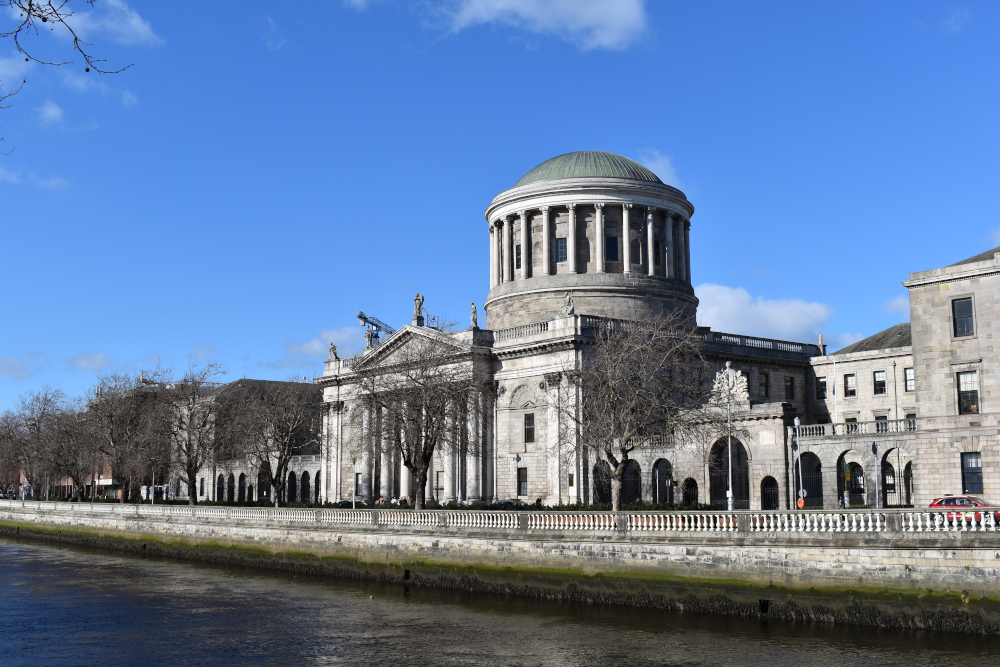
The Court of Appeal has dismissed a challenge to the legislation which provides for the issuing of a “single guilty verdict not requiring unanimity” by the Special Criminal Court.

About this case:
- Citation:[2025] IECA 249
- Judgment:
- Court:Court of Appeal
- Judge:Ms Justice Niamh Hyland
Delivering judgment for the Court of Appeal, Ms Justice Niamh Hyland highlighted that the appellant “is not being tried before a jury and his situation is not comparable to a person being tried before a jury” and that “he might argue that it is desirable for reasons of transparency that he knows whether one judge dissented: but he has failed to point to a breach of the Constitution in the present regime”.
Background
In November 2019, the appellant was charged with one count of false imprisonment and one count of causing serious harm contrary to sections 4 and 15 of the Non-Fatal Offences Against the Person Act 1997.
The DPP sent the case to the Special Criminal Court, and having been found guilty, the appellant was sentenced to 30 years’ imprisonment.
The appellant was granted leave to bring judicial review proceedings, with his core argument revolving around s.40 of the Offences Against the State Act 1939, which provides that every question before a Special Criminal Court shall be determined according to the opinion of the majority of the court and that no disclosure can be made as to the unanimity or otherwise of the verdict.
The appellant challenged the constitutionality of the single verdict prescribed by s.40, on grounds that same breached the guarantee in Article 38.1 of the Constitution of trial in due course of law, where, inter alia, a conviction based on a majority verdict in the Special Criminal Court, being normally two out of three judges, i.e. 66 per cent of the court, is unconstitutional, whereas a conviction based on 10 out of 11 jurors, i.e. 83 per cent, is constitutional.
The appellant further argued that the section breached the equality guarantee in Article 40.1 in that there is a difference in treatment in respect of the permissible majority verdict between a person subject to an ordinary jury trial and one subject to a trial in the Special Criminal Court, and breached the requirement for justice to be administered in public pursuant to Article 34.1.
Having been unsuccessful before the High Court, the appellant appealed to the Court of Appeal.
The Court of Appeal
Ms Justice Hyland agreed with the trial judge that Article 38.1 does not require a trial of a person before the Special Criminal Court to be equivalent to a jury trial, rather, it requires that the person will be tried in due course of law.
Noting that Article 38.5 specifically exempts offences tried by special courts from the requirement that trial should be by jury, the judge recognised that the appellant was suggesting that the decisions in O’Callaghan v. Attorney General [1992] 1 IR 538 and O’Callaghan v. Attorney General [1993] 2 IR 17 prevent a non-jury court from delivering a single guilty verdict as that would be below a minimum standard of certainty.
In this regard, Ms Justice Hyland pointed out that the entire focus of the court’s comments in O’Callaghan were upon the decision of the jury, observing “to state the obvious — this is not a jury trial. A non-jury trial does not have the character of a jury trial for obvious reasons. Considering what type of majority verdict would rob a jury trial of its essential nature is irrelevant to a consideration of the constitutionality of a non-jury trial. The latter is of an entirely different nature to the former.”
The judge considered that the appellant’s contention that there must be a parity between a jury trial and non-jury trial failed to recognise “the distinct and particular nature of a trial before the Special Criminal Court, as underpinned by Articles 38.3” and the “radical nature of the special courts identified under Article 38”.
The judge continued: “No explanation is given by the appellant as to why the provisions in relation to the delivery of a majority verdict should be essentially the same despite the enormously different context. He does not explain what right is attacked or under threat by a person being convicted in the Special Criminal Court having persuaded two judges and not a third, given the nature of the Special Criminal Court as specified by Article 38.”
As to the appellant’s equality argument, the Court of Appeal highlighted that the very wording of Article 38.3 makes it clear that courts established pursuant to that article are different, and that different rules will be prescribed by law for them in respect of their constitution, powers, jurisdictions and procedure.
Ms Justice Hyland highlighted: “They clearly do not require to be established in a way that is comparable to ordinary courts, since ordinary courts have been deemed inadequate to secure the effective administration of justice and the preservation of public peace and order.”
In those circumstances, the judge determined that the appellant’s attempt to establish a comparator, being a person who is tried by a jury, was “doomed to failure” and without a comparator, there was no basis upon which to engage in an equality analysis.
As to the appellant’s final argument to the effect that s.40 was unconstitutional by reference to Articles 34.1, Ms Justice Hyland noted that the appellant failed to avert to the exception in respect of special courts in Article 38.6.
The judge continued: “The dis-application of Article 34.1 effected by Article 38.6 means that, in a case of a court or tribunal established under Article 38, justice does not require to be administered in courts established by law by judges appointed in the manner provided by the Constitution and that the trials may be held by other decision makers. Equally, it permits the trial to be held otherwise than in public.”
The Court of Appeal also emphasised that the appellant would not obtain any benefit by knowing whether a decision was reached by majority as opposed to unanimously and that he could not point to any detriment in not knowing.
The court expressed no view on the observations or recommendations of two review bodies relied upon by the appellant, finding that the conclusions of their reports are relevant to desirability as opposed to legality.
In that regard, Ms Justice Hyland remarked that “this court is not an arbitrator of what is desirable or preferable”.
Conclusion
Accordingly, the Court of Appeal dismissed the appeal.
Harte v Special Criminal Court & Ors [2025] IECA 249

Share this article:

Subscribe to our newsletter to not miss articles like this one:
 SUBSCRIBE