



Written by:

Gillian O'Hanlon BL
Case Reporter
Court of Appeal: Appeal against sexual assault and rape convictions dismissed
 Reading time: 6 minutes
Written by:
Gillian O'Hanlon BL
Case Reporter
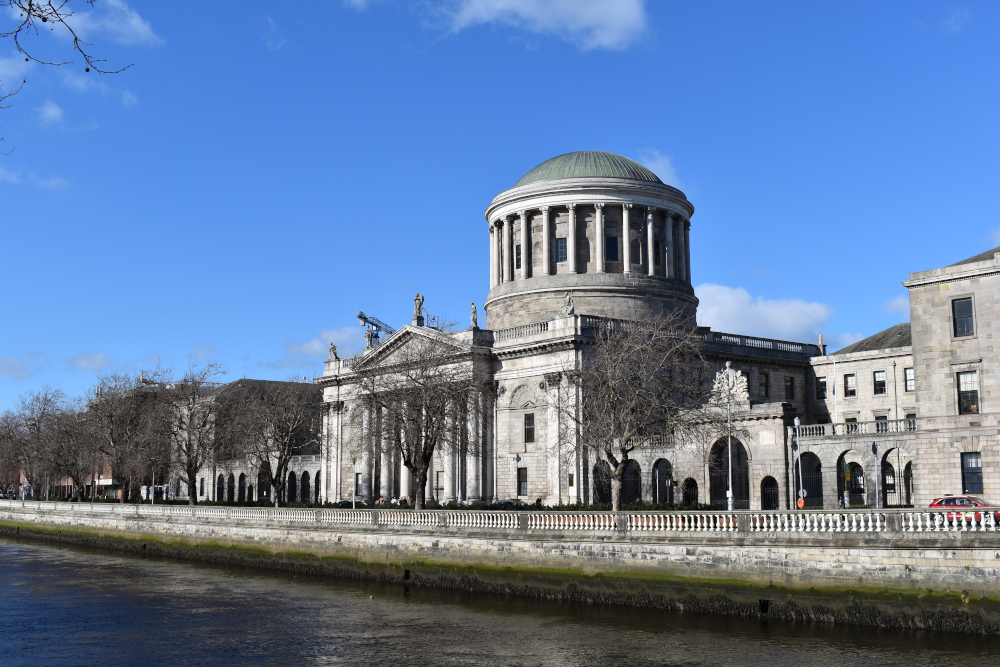
The Court of Appeal has dismissed an appeal against conviction notwithstanding that evidence of a doctor called by the prosecution should not have been elicited in re-examination or allowed by the trial judge.

About this case:
- Citation:[2025] IECA 252
- Judgment:
- Court:Court of Appeal
- Judge:Mr Justice Brian O'Moore
Delivering judgment for the Court of Appeal, Mr Justice Brian O’Moore emphasised: “The function of re-examination is not (except in truly unusual circumstances) to allow counsel to cross-examine their own witness. Yet this is what happened here. It should not have been permitted.”
Background
On 31 October 2021, the injured party was walking home after socialising with friends when she met the appellant whom she knew from her secondary school.
The injured party alleged that the appellant agreed to walk her home, and upon approaching a shortcut to her house, the appellant attacked the injured party.
The injured party’s parents contacted gardaí and she was taken to the sexual assault treatment unit where she was examined by Dr John Bermingham, consultant obstetrician and gynaecologist, at 2.45am on 1 November 2021.
At trial, the appellant was convicted of rape contrary to s.45 of the Offences Against the Person Act 1861 and s.2 of the Criminal Law (Rape) Act 1981 (as amended), of rape contrary to s.4 of the Criminal Law (Rape) (Amendment) Act 1990, and of sexual assault contrary to s.2 of the 1990 Act (as amended).
Dr Bermingham was called by the prosecution to give evidence at the trial, who confirmed in his evidence and upon re-examination that his findings were consistent with what the injured party told him had happened, being non-consensual sexual activity.
The appellant was sentenced by the Central Criminal Court to imprisonment, his sentences to run concurrently as at the date of conviction, and to registration on the Sex Offenders Register on an indefinite basis.
The appellant appealed his conviction to the Court of Appeal.
Submissions of the parties
The appellant contended that a re-examination of Dr Bermingham by the prosecution should not have been permitted where there was an unwarranted repetition of his findings, and that being called to give an opinion on the issue of consent was a matter for the jury and the ultimate issue at trial.
The respondent submitted that the prosecution went no further than asking Dr Bermingham whether his findings were consistent with the history of non-consensual sexual activity given by the respondent, and that Dr Bermingham was not asked, and did not give, an opinion as to whether or not there was consent on the night in question.
The respondent further submitted that Dr Bermingham, as a consultant obstetrician and gynaecologist in the sexual assault treatment unit of the hospital, met the formal justification for the admission of the evidence that he gave as his evidence touched upon a matter beyond the ordinary human experience, and he possessed specialised knowledge that could assist the jury.
The Court of Appeal
Mr Justice Brian O’Moore noted that in his submissions to the Court of Appeal, the appellant accepted that the direct evidence of Dr Bermingham did not result from a question to which any objection could have been taken.
The judge also considered the respondent’s submissions that the account of the non-consensual activity given by the complainant to Dr Bermingham had been put to the injured party by the appellant’s counsel, finding that the jury “were therefore well aware” by the time Dr Bermingham gave evidence, of the fact that he had been told by the complainant that she had been forced into sexual activity with the appellant.
Mr Justice O’Moore clarified: “It was in that context that the answer given by the doctor at the end of his direct evidence would have been understood.”
The Court of Appeal recognised that given that fact, the appellant focused his submissions on the repetition by Dr Bermingham upon re-examination of evidence adverse to the appellant, but said: “No authority was presented to us supporting the argument that this would justify setting aside the appellant’s conviction.”
Nonetheless, the court analysed the examination of Dr Bermingham, noting the respondent’s contentions that that his evidence was ambiguous as to his role and ability to give evidence as to whether sexual activity was consensual, and second that the jury may have understood his evidence as suggesting that the relevant sexual activity had been consensual.
The Court of Appeal found those arguments to be entirely without foundation, as to his function was “crystal clear” and that he had accepted that his role was not to give evidence about consent.
In those circumstances, Mr Justice O’Moore was satisfied that the re-examination of Dr Bermingham was not for the purpose of clarifying uncertain evidence but was in fact seeking to challenge the clear evidence given on cross-examination.
The judge explained: “The function of re-examination is not (except in truly unusual circumstances) to allow counsel to cross-examine their own witness. Yet this is what happened here. It should not have been permitted.”
The court was also unconvinced that the jury, having heard from Dr Bermingham that he was not giving evidence on the issue of consent, might have thought that a one-word reply given by him meant that he was suggesting that his testimony was in any way supportive of an account of consensual sex.
Notwithstanding its finding that the relevant evidence in re-examination should not have been elicited or allowed, the Court of Appeal refused to set aside the appellant’s conviction where the impugned evidence simply repeated evidence which the witness had already given, and where any reservations that the jury might have had about his testimony were unlikely to have been dispelled solely by the repetition of the evidence in re-examination.
Furthermore, the court noted that the appellant had been expressly invited by the trial judge to cross-examine Dr Bermingham arising out of the relevant re-examination and that he chose not to do so.
Conclusion
Accordingly, the Court of Appeal dismissed the appeal.
DPP v Michael Molloy [2025] IECA 252

Share this article:

Subscribe to our newsletter to not miss articles like this one:
 SUBSCRIBE