


Susan Leahy: Beyond reform, why survivors’ lived experiences must shape sexual offence trials
 Reading time: 5 minutes

The ‘Lived Realities’ Project is seeking survivors who have had experience of the offence trial process, writes Professor Susan Leahy.
While once there was significant inertia in sexual offences law reform, debates about how to improve legal and policy responses to sexual violence are now never far from media and political debates.
This welcome attention to better recognising and responding to the harms of sexual violence and the needs of survivors has generated many notable reforms, including the introduction of new offences and improvements to investigative and trial processes.
However, while much has been done, there is a lot which remains to be achieved. Perhaps most significantly, little attention has been paid to measuring whether the laws and policies which have been introduced over the past decade or so have actually achieved their intended objectives.
While sustained commitment to reform is vital, this is necessarily only a first step in achieving change. The key to success lies in meaningful implementation and continual review of the operation of laws and policies to ensure that they are contributing to closing what many refer to as a ‘justice gap’ for survivors. Without review and monitoring, real progress cannot be achieved.
An example of the importance of vigilance in reviewing the practical implications of sexual offences law reform may be seen in the rules relating to the regulation of the disclosure of complainants’ counselling notes, which were introduced in the Criminal Law (Sexual Offences) Act 2017 (which inserted section 19A into the Criminal Evidence Act 1992).
While these rules sought to minimise the introduction of such evidence at trials, this was not achieved in practice largely due to the ‘waiver’ provisions whereby complainants could consent to the disclosure of their notes, thereby obviating the application of the scheme. The fact that this law was not working as intended became apparent in research this author completed with legal professionals and court accompaniment workers. The participants in this study noted that complainants were waiving the application of the scheme to avoid any potential delays and due a general lack of information about their rights regarding disclosure. Since then, the challenges with the scheme have been acknowledged by the Supreme Court and the law in this area has been reformed to further restrict the use of complainants’ personal records in sexual offence trials (Criminal Law, Civil Law and Defence (Miscellaneous Provisions) Act 2026).
The example of the rules on counselling notes aptly demonstrates the importance of reviewing the operation of reforms in a timely manner. Numerous methods of studying the operation of sexual offence trials may be employed to conduct such review.
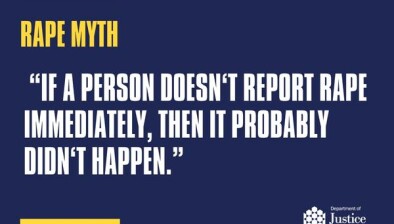
These include: court observations; analysis of trial transcripts, and; research with mock jurors to determine how lay persons understand and apply legal rules and, importantly in the context of sexual offences, the extent to which attitudes about sexual offences or ‘rape myths’ may impact jurors’ interpretations of legal rules. Interviews and surveys of stakeholders such as this author’s previous research in Ireland are also an important barometer of the success of prevailing laws and policies. Perhaps most importantly, researchers are also increasingly seeking the perspective of survivors on their lived experiences of investigations and trials of sexual offences to determine how laws and policies are experienced by those most directly impacted and, significantly, what those who have experienced the system first-hand think should be the priority for reform efforts.
In Ireland, very little of the foregoing research has been conducted, resulting in a significant knowledge gap which hinders the likely success of future reform efforts. An effort to begin to fill this knowledge deficit is currently underway at the University of Limerick where a research study is seeking survivors of sexual violence to share their experiences of the trial process. The project (‘Lived Realities: Victim-Survivors’ Experiences of Irish Sexual Offence Trials’) is funded by Research Ireland, in association with CUAN, the Domestic, Sexual and Gender-Based Violence Agency. The findings from this research will be published as a report which will be publicly available and will shine a light on the practical operation of sexual offence trials in Ireland. The project will amplify the voices of survivors and recommend reforms which will ensure that the criminal justice system is appropriately trauma-informed and responsive to survivors’ needs.
The ‘Lived Realities’ project is currently seeking survivors who have had experience of the sexual offence trial process since 1st of January 2019 to participate in a research interview. For details on participation, please see our webpage www.ul.ie/lived-realities or contact the research team via email at realities@ul.ie.
Professor Susan Leahy is director, Centre for Crime, Justice & Victim Studies (CCJVS) and course director, LLM/MA Human Rights in Criminal Justice at the University of Limerick.

Share this article:

Subscribe to our newsletter to not miss articles like this one:
 SUBSCRIBE