

Coalition calls on government to make civil legal aid reform a Budget 2027 priority
 Reading time: 6 minutes
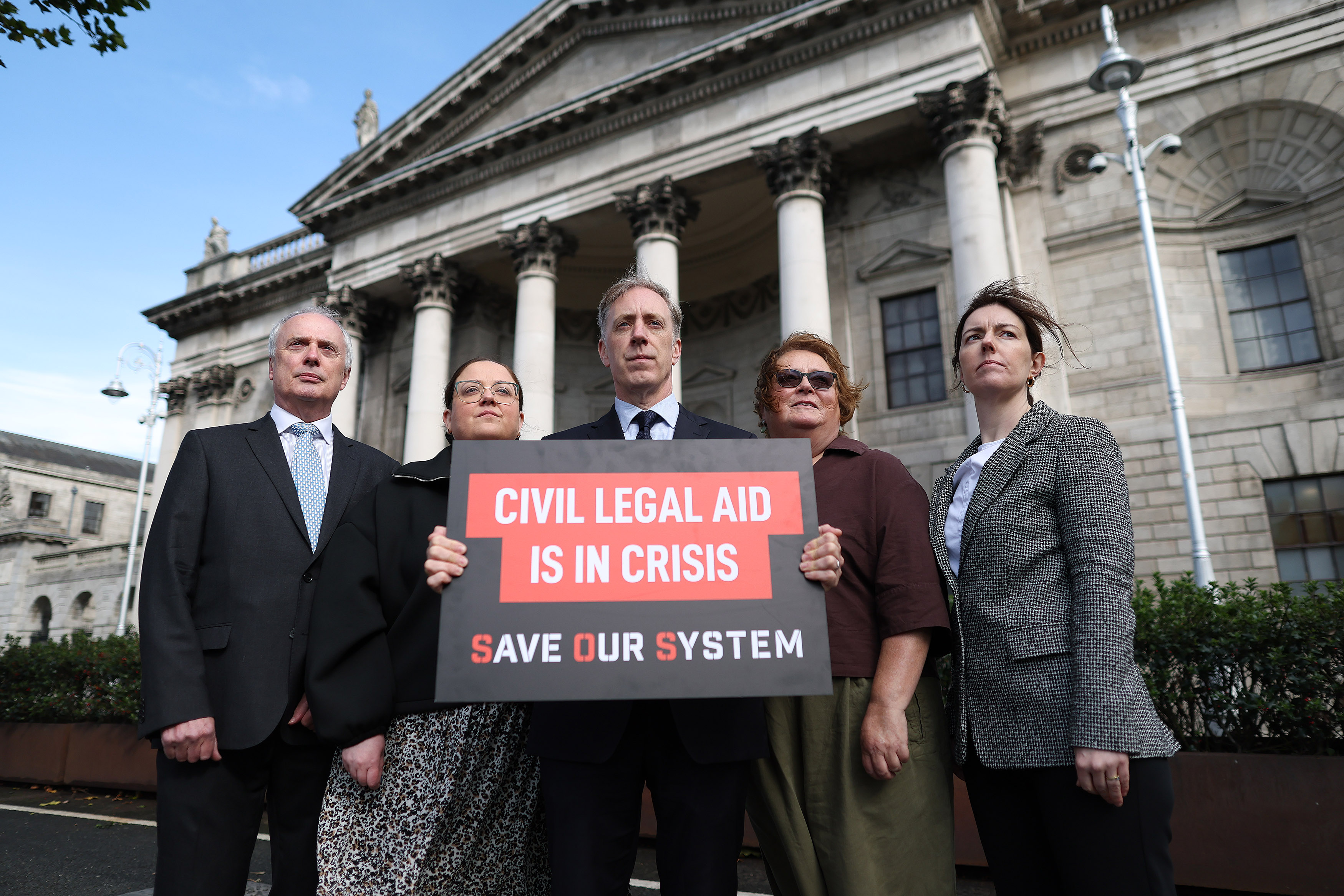
Credit: Julien Behal Photography
A coalition of organisations representing those who rely on, work within and advocate for Ireland’s civil legal aid system are today calling on government to make meaningful investment in civil legal aid a priority in Budget 2027 to allow for comprehensive reform of the system
The organisations say that civil legal aid is fundamental to ensuring access to justice for people involved in some of the most complex and sensitive legal proceedings, including in family law, childcare, domestic violence and other matters affecting vulnerable individuals and families, as well as in areas which are currently largely excluded from the civil legal aid scheme, including housing, employment, social welfare and discrimination law.
One year on from the publication of the Independent Review Group’s Review of Civil Legal Aid, the coalition is calling on Government to make civil legal aid a priority in Budget 2027 and tackle the challenges facing all those who depend on and deliver these vital services.
While each organisation has its own priorities and experience of the system, all share a common concern that the current civil legal aid framework is under significant strain and failing to address the legal needs of disadvantaged groups.
Financial eligibility thresholds have failed to keep pace with rising living costs, leaving many people unable to qualify for legal aid despite being unable to afford private legal representation. At the same time, longstanding sustainability issues, including difficulties recruiting and retaining experienced legal practitioners and a significant decline in the number of private solicitors willing to undertake legal aid work, continue to place increasing pressure on the delivery of services and access to representation.
The Legal Aid Board cannot provide legal representation in key areas for disadvantaged groups such as housing, social welfare and discrimination, and it is not mandated to provide people with legal information about their rights. There are currently delays of over a year for a first appointment with a Legal Aid Board solicitor.
Without urgent action, high levels of legal need amongst disadvantaged groups will continue to go unmet, delays will continue to increase, pressures on the courts will grow and those who depend on civil legal aid will bear the consequences.
Séamus Clarke SC, incoming chair of the Council of The Bar of Ireland said: “This coalition brings together organisations with different perspectives but a shared objective: ensuring that the civil legal aid system is an effective and sustainable service.
“Government has already received detailed recommendations from the Independent Review Group. The recommendations now need to be urgently implemented. Budget 2027 must mark the point where action is taken.
“From the Bar of Ireland’s perspective, reform must address both sides of the equation. Expanding eligibility thresholds is an important objective. However, without a meaningful increase in the low remuneration for solicitors and barristers under the Private Practitioner Scheme, professional retention will continue to decline, ultimately rendering access to legal aid ineffective.”
Eilis Barry, FLAC chief executive said: “Civil Legal Aid needs to be treated like a vital public service in the same way as housing, health and education and not just an ‘add-on’ or afterthought. We have arrived at a once in a generation opportunity to not just increase the resources of the Legal Aid Board - which is clearly necessary - but to finally establish a fit-for-purpose system of public legal assistance to meet the needs of the most disadvantaged.
“Meaningful reform is straightforward, practical and cost effective. Establishing general and targeted legal information services, a network of targeted law centres for disadvantaged groups and community law centres in the areas of highest deprivation are comparatively cheap measures and would transform access to justice for the most disadvantaged communities. They will ultimately save money for the State by preventing legal problems and their consequences for individuals and families from escalating.”
Tanya Ward chief executive of the Children’s Rights Alliance, said: “Every child should have access to, and support through, legal aid, when and where they need it. We are particularly concerned about the significant barriers to accessing justice that are all too common for vulnerable children and families in childcare proceedings, family law cases and children in families affected by domestic, sexual and gender-based violence.
“Removing financial barriers to accessing the civil legal aid scheme and ensuring the civil legal aid system is sufficiently resourced to respond in a timely manner are two key areas within the government’s power to deliver in Budget 2027.”
Sarah Benson, chief executive officer of Women’s Aid said: “Women’s Aid supports women in the courts including the busiest family law court in the country every day. We witness the huge negative impact of the current under resourced Civil Legal Aid system on some of the most vulnerable court users: those who suffer domestic violence.
“Lengthy delays, lack of access to representation and an outdated means test threshold that excludes so many is contributing to an experience of the courts system that many refer to as ‘secondary victimisation’.
“The challenges are known and the solutions are known. We require practical action by government urgently, not further reports, to alleviate an overburdened system and improve access to justice for those most at risk, as is their right.”
Rosemarie Loftus, president of the Law Society of Ireland said: “The Civil Legal Aid Scheme exists to support people on low incomes through some of the most difficult moments of their lives, including family breakdown, domestic violence and child custody disputes. Right now, it is failing them.
“Financial circumstances must not prohibit access to our justice system. Everyone should be able to access legal representation and a fair hearing before the courts, regardless of their means. Yet for many, legal assistance is increasingly out of reach.
“People are waiting an average of almost six months for a first consultation with a solicitor. In parts of the country, that wait exceeds a year. Behind many of those on waiting lists are families in crisis, seeking legal help on issues including child access, maintenance, marital breakdown and domestic violence. Demand for services is rising, yet figures from the Legal Aid Board show the number of private solicitors participating in the Civil Legal Aid Scheme has plummeted.
“An income threshold of €18,000, unchanged since 2006, is locking people out of justice. It must rise, and it must be matched by real investment in the Legal Aid Board to expand access and reduce waiting times.”

Share this article:

Subscribe to our newsletter to not miss articles like this one:
 SUBSCRIBE