Is this email not displaying correctly? View it in your browser.
17th November 2025
The only all-Ireland daily news service for lawyers
Today’s Headlines
Latest News

Lawyer of the Month: Constance Cassidy SC

By Colin Cardwell

Lawyer of the Month: Constance Cassidy SC

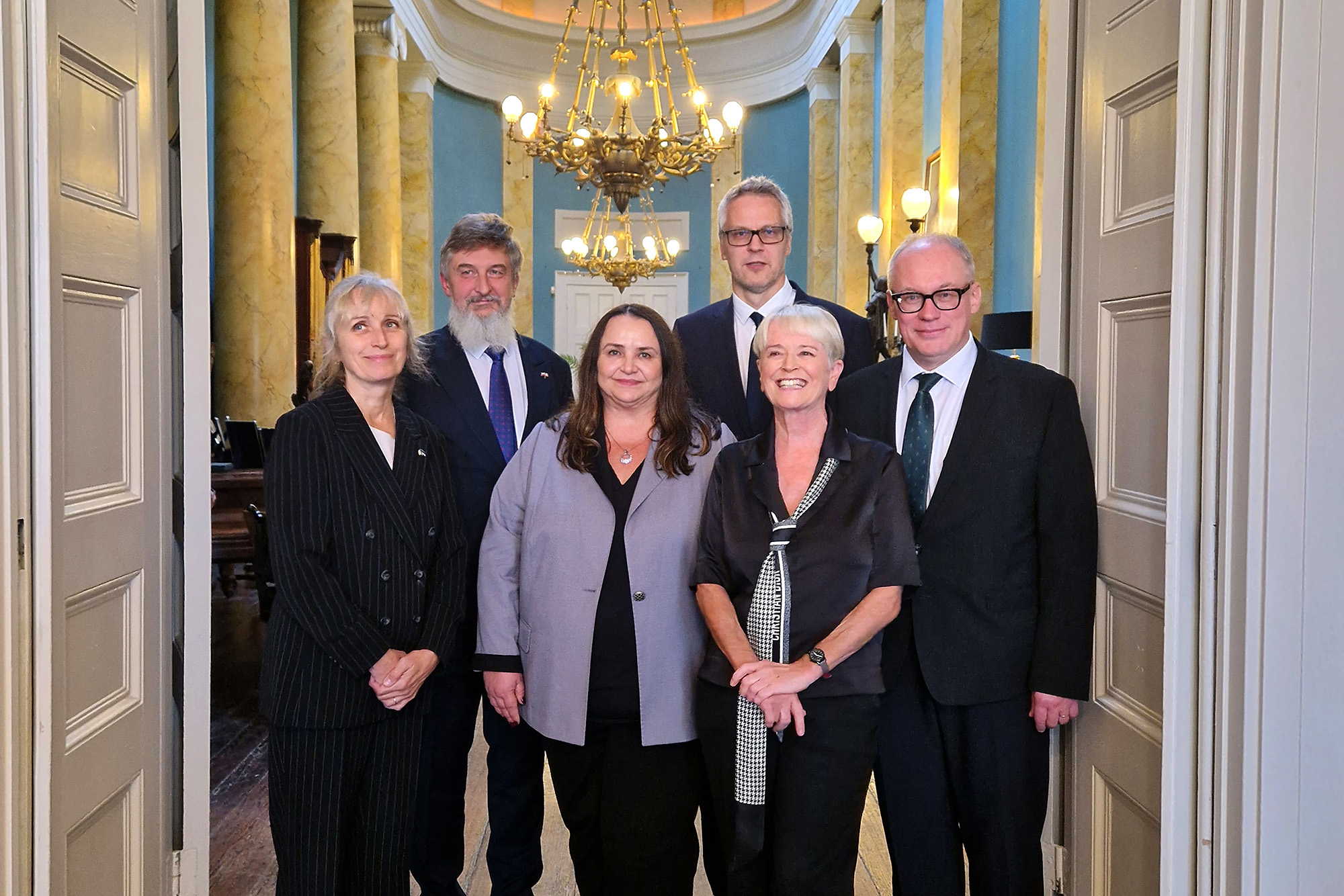
Pictured: Constance Cassidy SC (second from right) with Estonian ambassador Kairi Künka, Polish ambassador Artur Michalski, Ukrainian ambassador Larysa Gerasko, Latvian ambassador Juris Štālmeistars and Lithuanian ambassador Jonas Grinevičius on their group visit to Lissadell House in October 2025.

The word that regularly recurs in Constance Cassidy’s vocabulary is “busy”. Often augmented to “busy, busy, busy”. It’s hardly surprising. The senior counsel’s day has begun some five hours before our mid-morning interview and the number of appointments in her diary would be, for most of us, daunting.

“Let’s see,” she says, leafing through upcoming events. “I was in Tralee yesterday and next week I’m in Longford, Ennis, Limerick, Drogheda and… oh, apparently I’m in Bandon and Donegal soon — so yes, it is busy, but it’s a great profession to be in.”

Her life is also an enviably eclectic one. Recently, as the chatelaine of Lissadell House in Co Sligo, former home of the Gore-Booth family and her namesake, Countess Constance Markievicz, Ms Cassidy hosted the ambassadors of Ukraine, Estonia, Latvia, Lithuania and Poland.

Others who dropped in to visit have included King Charles III, then the Prince of Wales, and his wife Camilla; in 2015 the Cabinet held a meeting in the dining room at Lissadell to honour Markievicz.

However, as Christmas approaches, Ms Cassidy is concentrated on a singularly challenging contemporary issue: that of homelessness in Ireland.

This week sees the return of the Christmas lectures from Lawyers Against Homelessness (LAH) — a collaborative effort between barristers and solicitors, led by Ms Cassidy.

The energetic barrister was the founder of the fundraising initiative for the city’s Capuchin Day Centre, which provides support for homeless people in Dublin’s Bow Street, near where she and many others began their legal careers.

Ms Cassidy’s interest in the problems of the homeless date back to her placement in a solicitor’s office in Merchant’s Quay, opposite the Four Courts in Dublin, after she left school with her leaving certificate at just 16.

She recalls: “Merchant’s Quay, as you know, houses the Adam and Eve church. Working in the area, I could see the Capuchin friars busy helping and I was fascinated by them.

“My sister Pamela Cassidy, a solicitor, and my daughter Constance would help homeless people with hot water bottles and food — particularly at Christmas time — and my daughter asked how we could help further.”

From that was born the idea for continuing professional development (CPD) lectures for the legal profession which centred on the issue.

“Some years ago I approached Brother Kevin Crowley, and we agreed that we could have these lectures in the Capuchin Day Centre,” Ms Cassidy says.

“This is the 17th CPD seminar since the beginning. We have had three events every year, except during Covid. Christmas is always the busiest and the best attended.”

Over the course of the 17 events, an impressive sum of €550,000 has been raised so far.

Ms Cassidy works with a small committee of barristers and solicitors, including her husband Eddie Walsh SC, daughter Constance, son Harry and sister Pamela Cassidy.

“We contact judges, the attorneys general, various ministers, and experts in their chosen field — barristers and solicitors — and ask them to speak on a topic of their choosing,” she explains.

“No one has ever said no. Everyone in Ireland, including the legal profession, is fully aware of the scale of the housing crisis and wants to help.”

Lawyer of the Month: Constance Cassidy SC

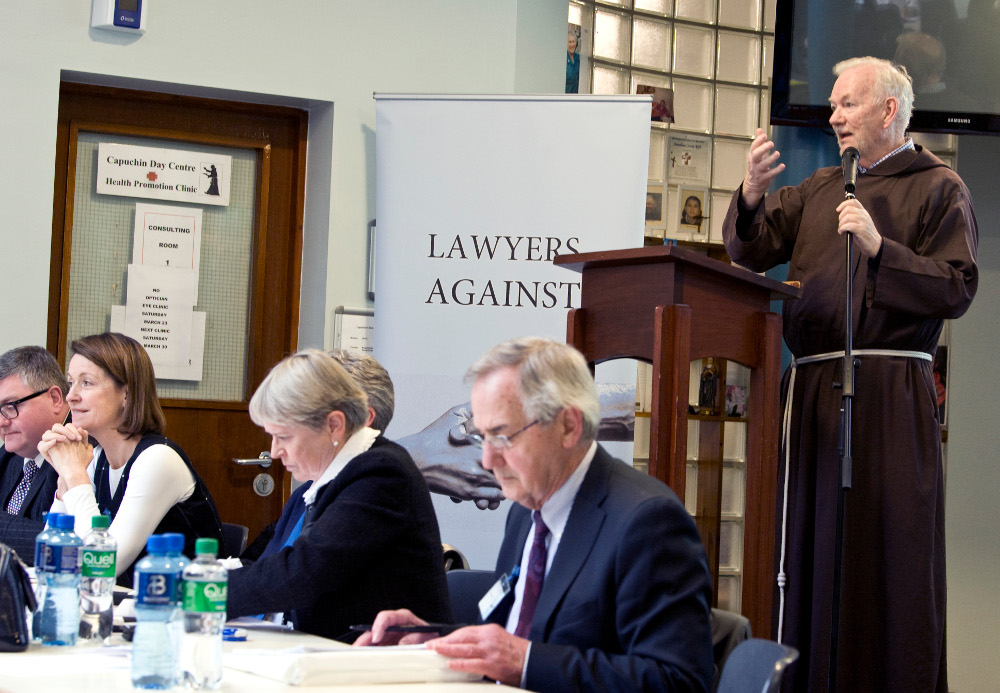
Pictured: Brother Peter Rogers addresses a Lawyers Against Homelessness event.

The CPD dates are very popular among the legal fraternity. “One reason is that the Capuchin Day Centre is part of our community. It’s right beside the Law Library and many solicitors’ firms.

“Importantly, there are no administration fees; 100 per cent of the money donated goes to the centre and people are impressed with that so we get very large donations from solicitors’ firms and indeed from barristers,” she says. “People are very good.”

It’s also a personal cause. Ms Cassidy founded Lawyers Against Homelessness with a view to helping Brother Kevin in his lifelong battle against homelessness.

“Sadly, he died this year and we had become very close indeed,” she says. “I used to visit him in his nursing home in Cork and we would chat on the phone.

“He told me something important: ‘When I was a young priest it occurred to me not to judge people because of the situation they are in. Every person who comes into the Capuchin Day Centre is given food and medical treatment in a caring environment without feeling under any pressure of any kind.’”

The day job — which necessitates a relentless series of journeys across the country from Dublin to Donegal and Kerry — is that of a barrister whose speciality is in licensing.

“The majority of my business is in that area and I travel all over the country to get licenses for hotels, for pubs, for off licenses and many retailers,” Ms Cassidy says.

That niche skill — and the law in general — is deep in the warp and weft of the family. Her sister Pamela is a solicitor, while three of her children studied law and her son Harry is a barrister. Her father was a barrister and later judge of the Western Circuit. Her mother served in the Senate from 1977 to 1981.

“My husband, Eddie Walsh SC, is a barrister and my father, John Cassidy SC, was the son of a publican, who became the acclaimed expert in licensing in this country,” she explains.

As the granddaughter of a publican and the daughter of a specialist in that field, it was a natural place to go. “It’s an interesting area,” she adds. “The licensing code is a very restrictive one, based on the Licensing (Ireland) Act 1902 which prohibited the grant of new publicans’ licences, save in very exceptional circumstances.

“The code has been liberalised by the Intoxicating Liquor Act, 2000, which amended many of the provisions of the Act of 1902 regarding the grant of a new on licence or a new off licence, without restrictions as to parish or distance or even type of licenses.

“But it’s curious that an act brought in by the English as a temporary measure to stop the explosion of public houses in every town in Ireland is still in force, albeit in an amended format.”

Ms Cassidy has written the seminal text, Cassidy on the Licensing Acts, the fourth edition of which — running to almost 2,000 pages — will be published by Clarus Press. She has also written various handbooks on different areas in the licensing code.

Though from Co Kildare, where she lives in a 17th-century house near Newbridge, Ms Cassidy’s other passion — and for which she is best known by many — is Lissadell House and gardens, the neo-classical Greek Revival country house in Co Sligo, the childhood home of Irish revolutionary Constance Gore-Booth, later Countess Constance Markievicz, where poet William Butler Yeats was a frequent guest.

She and her husband Eddie bought the estate 22 years ago, and despite a protracted case over rights of way across the 410-acre estate fought with Sligo County Council which the family finally won in the Supreme Court in November 2013 (a struggle that she admits was “bruising”), the couple and their family have since turned it into a successful, well-run family business.

When asked why the couple bought a rather austere Georgian mansion perched on the edge of the wild Atlantic, she laughs heartily (she laughs a lot). “Don’t ask me why I did it. Ask my husband. He was very interested in the property when he saw it for sale in the Irish Times.

“We had seven children and while he felt it would be a good business opportunity, to attract tourism to a rock on this side of the Atlantic Ocean, the children love it. Lissadell has been part of all their lives, and they are very emotionally involved in the place, as well as helping Eddie outside and helping me inside — because it’s hard work.

“And remember, as you must, that all Irish Constances were called after Countess Constance Markievicz, me included, because my father named me after her. So that’s something of a coincidence, but it’s another part of my life which I love.”

She sums up her career in the law, her involvement with LAH and her obvious pride in Lissadell to what her father used to tell her as a young girl: “Anything that is worth doing, is worth doing well.”

Rosemarie J. Loftus named 155th Law Society president

Rosemarie J. Loftus named 155th Law Society president

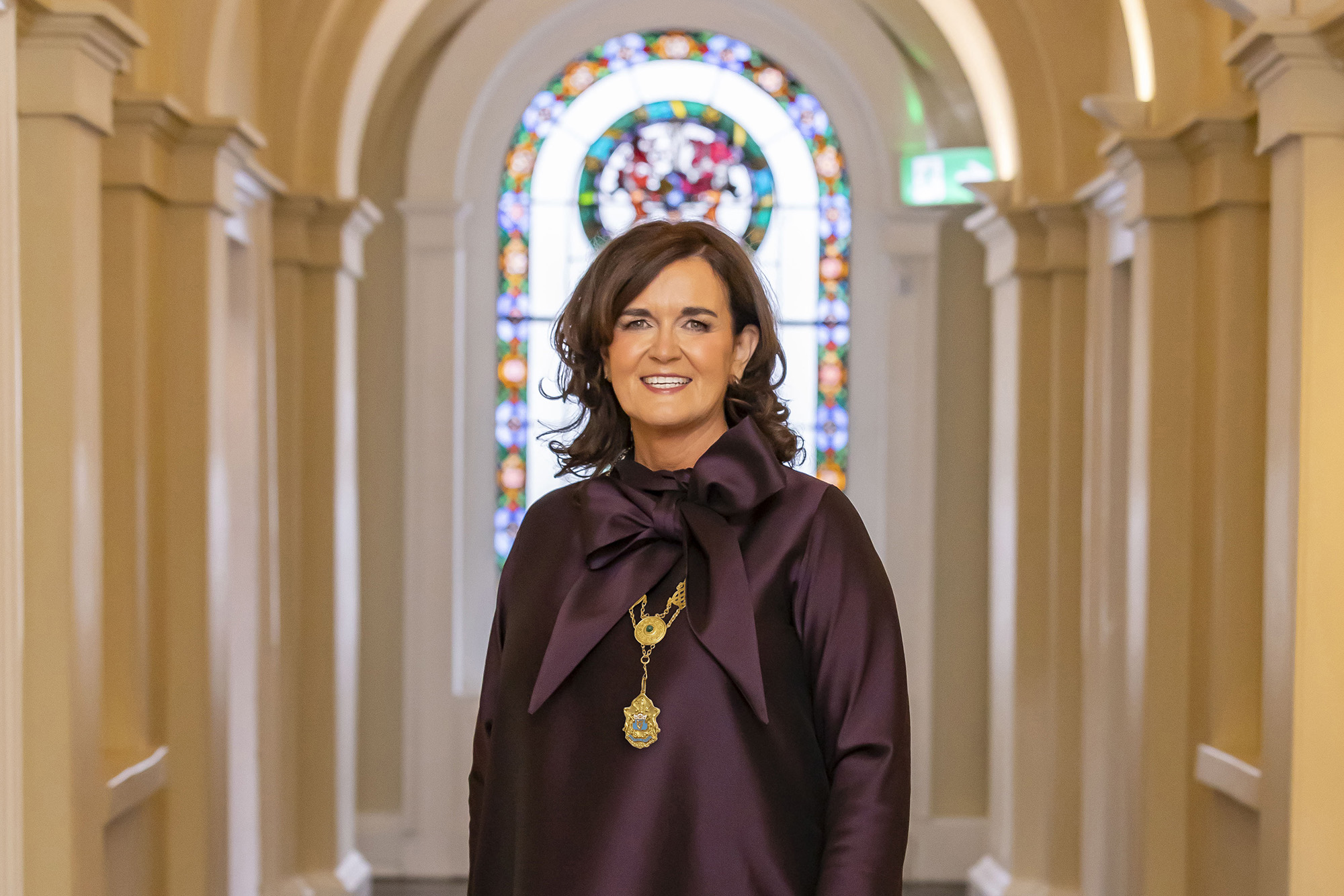
Pictured: Law Society of Ireland president Rosemarie J. Loftus.

Mayo solicitor Rosemarie J. Loftus has been elected as president of the Law Society of Ireland.

Ms Loftus is a partner at family law firm Bourke, Carrigg & Loftus in Ballina, County Mayo. She qualified as a solicitor in 1991.

She becomes the 155th president of the Law Society and the first woman from Mayo to serve in the role.

Commenting on her appointment, Ms Loftus said: “It is both an honour and privilege to serve as president of the Law Society for the next 12 months, and to be only the seventh woman to do so.

“Recognising the vital role that sole practitioners and smaller firms play in their local communities, and the unique challenges and opportunities they face, I am committed to supporting and advocating for my fellow solicitors to the best of my ability.

“As a proud Mayo woman and solicitor practising in Ballina, I will call on my experiences of working within a smaller community to be a progressive voice, supporting and representing local and rural solicitors across the country.”

She continued: “To represent the solicitors’ profession both at home and on an international stage, is a privilege. I do not underestimate the responsibility that I will have and I will undertake the role with great pride and care.

“As the Law Society continues to deliver its ambitious strategy, supporting solicitors across the country, I will champion this work for the benefit of the public and legal profession, both present and future. 

“Together, we will work towards the enhancement and evolution of a justice system that can best support the needs of its users.

“The expertise within the solicitors’ profession, along with the commitment of the Law Society and our stakeholders, means we can work to create a justice system that is just, equitable, and meets the needs of Irish society. 

“I look forward to building on the great work of my predecessors and serving the solicitors’ profession with optimism and commitment.”

Ireland’s chief justice to head EU judicial network

Ireland's chief justice to head EU judicial network

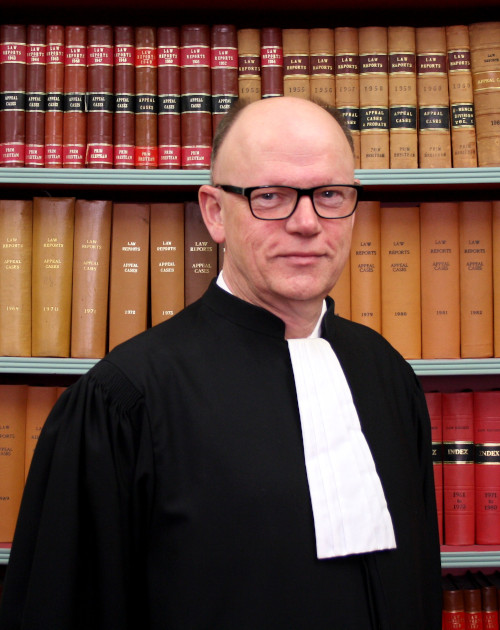
Chief Justice Donal O'Donnell

Chief Justice Donal O’Donnell has been elected as president of the Network of Presidents of the Supreme Judicial Courts of the European Union.

Ireland’s top judge was elected to the post late on Friday afternoon during a meeting of the network in The Hague.

The network brings together the presidents of the supreme courts of the 27 EU member states, along with associate members and observers.

They exchange experiences, strengthen cooperation, and provide perspectives to European institutions on issues affecting the judiciary.

It serves as a vital platform for dialogue on matters of common interest, including judicial independence and the rule of law.

Commenting on his election, Chief Justice O’Donnell said: “I am honoured to have been elected president of the Network of Presidents.

“The network provides an important forum for the exchange of views between supreme courts in the EU and a space for the collective representation of the views of national courts in dialogue with the Court of Justice of the European Union and the European Court of Human Rights.

“This has never been more important than today when courts and the rule of law face challenges in Europe and beyond.

“Courts remain a cornerstone of constitutional democracy, and Ireland, as the largest common law jurisdiction remaining in the EU, brings a particular insight and a responsibility to ensure that voice continues to be heard.”

Justice, home affairs and migration minister Jim O’Callaghan added: “I would like to offer my warmest congratulations to Chief Justice Donal O’Donnell on his election as president of the Network of the Presidents of the Supreme Judicial Courts of the European Union.

“His election is deserved recognition of his excellence as a judge. It also recognises the high esteem in which the Irish judiciary are held in Europe. 

“This network is an important platform for collaboration, information exchange and mutual assistance across the highest courts in Europe.

“With a wide breadth of experience and acknowledged expertise in constitutional law, Chief Justice O’Donnell brings a wealth of expertise to this role.

“In addition to serving as Ireland’s most senior member of the judiciary since 2021, he spent over a decade as a Supreme Court judge and his career as a practising barrister spanned almost 30 years. 

“Chief Justice O’Donnell has made a significant contribution to the Irish legal system throughout his career, and I wish him every success as he takes on this pivotal leadership position.”

John McEvoy appointed CEO of Duality Healthcare

John McEvoy appointed CEO of Duality Healthcare

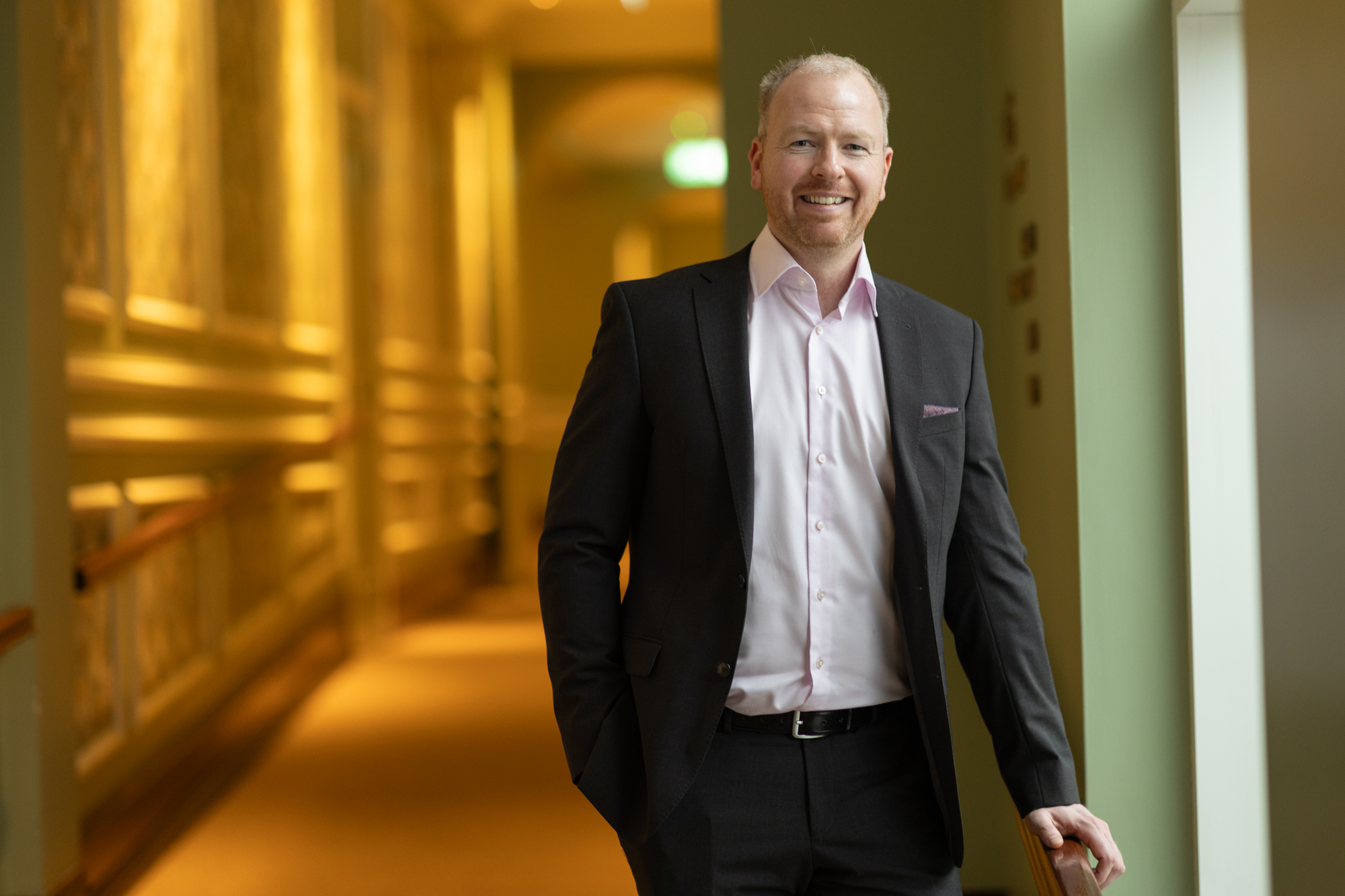
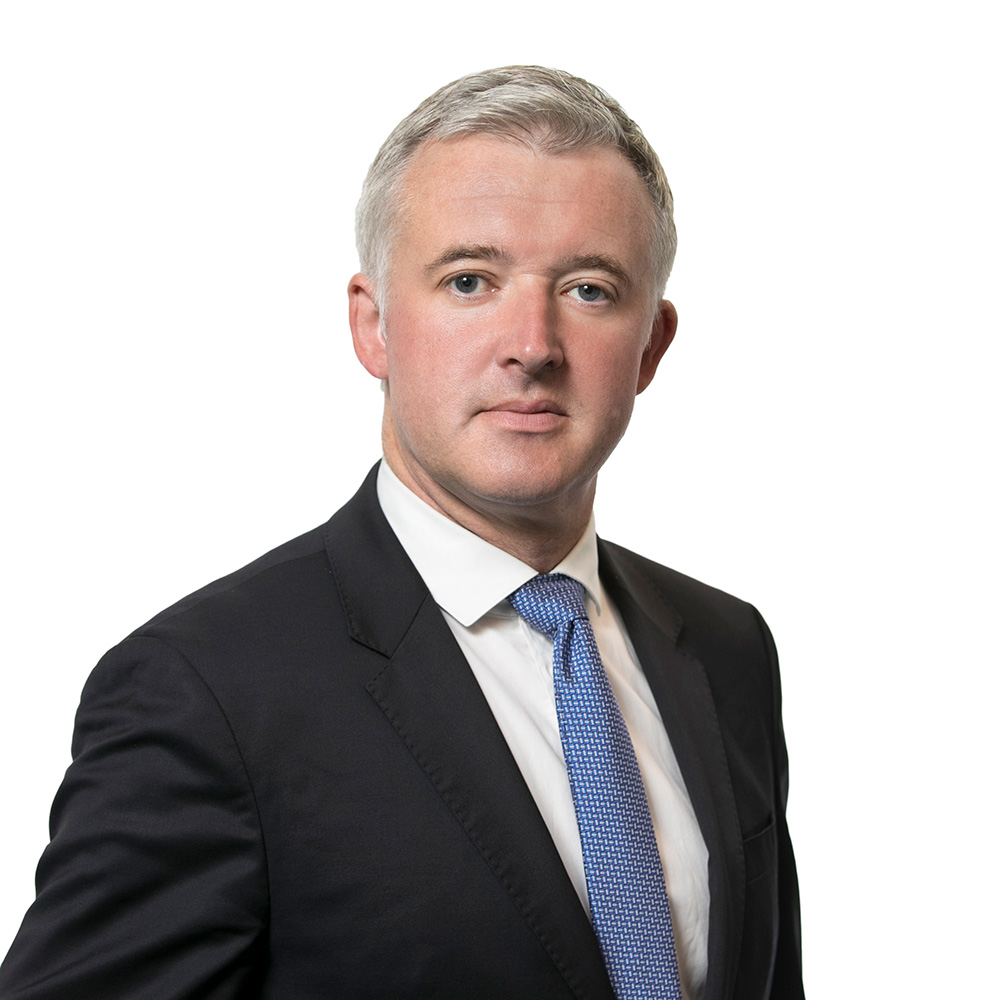
Pictured: John McEvoy, CEO of Duality Healthcare.

Lawyer John McEvoy has been appointed as chief executive officer of Duality Healthcare in Northern Ireland.

Mr McEvoy has played a pivotal role in guiding Duality Healthcare’s strategic vision and growth to date as chairman and co-founder.

In his new role as CEO, Mr McEvoy will lead the company’s next phase of innovation and expansion with the goal of setting new standards of patient-focused, affordable and accessible healthcare across Northern Ireland.

The business has announced a series of key leadership appointments as it gears up for a new phase of strategic growth.

It comes after Duality Healthcare this year announced the successful completion of a £4.5 million investment round.

The funding will accelerate the launch of new clinics, further expansion of healthcare services and the creation of up to 80 new jobs across NI.

Duality Healthcare clinics are currently open in Newry, Ballymena and Omagh, with further clinics earmarked to open in 2026.

Co-founder Mr McEvoy is an experienced healthcare and life sciences executive, corporate strategist, and lawyer with a career spanning over two decades in international legal practice, corporate leadership, and healthcare innovation.

A graduate of Queen’s University Belfast, he began his career in private practice at international law firms Herbert Smith Freehills and Arthur Cox.

He then held several executive leadership roles as general counsel in the life sciences sector where he was centrally involved in cross-border mergers and acquisitions, capital markets transactions, and listings on international markets such as the Nasdaq.

Commenting on his appointment as CEO, Mr McEvoy said: “Our strengthened leadership team positions Duality Healthcare strongly to set a new standard in patient-focused healthcare.

“I am honoured to take on the role of CEO at such a key moment in the company’s growth journey and excited to lead our talented team into the future.

“Primary care in Northern Ireland is under significant pressure, and there is a clear need for new, innovative models that truly put patients first.

“I look forward to working with the wider team to deliver accessible, high-quality, affordable healthcare to communities across Northern Ireland and redefine how people experience primary care through improved access, enhanced outcomes, and building a system that truly works for patients.”

BHSM boosts commercial real estate team with new senior associate

BHSM boosts commercial real estate team with new senior associate

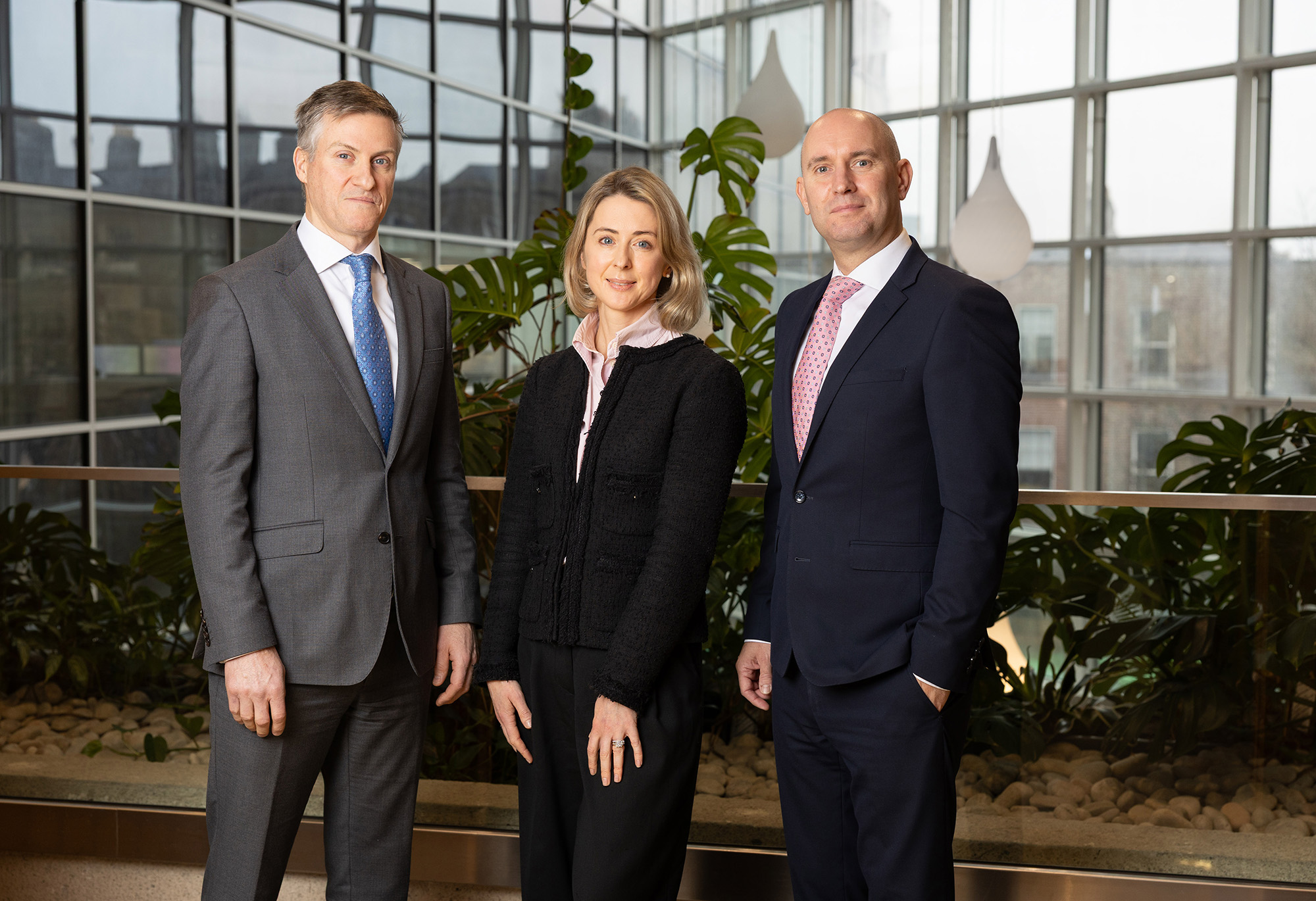
Pictured: Giles Smyth (left), Niamh Carragher (centre) and Mark Homan (right).

BHSM LLP has appointed Niamh Carragher as a senior associate in the firm’s commercial real estate team.

Ms Carragher has extensive experience in all aspects of commercial real estate transactions.

She advises landlords and tenants in commercial leasing transactions of mixed-use, office, retail, leisure and industrial developments.

She also represents real estate developers on a broad range of transactions including the acquisition and disposal of commercial properties for development, financing and re-financing and on-going asset management purposes.

Prior to joining BHSM LLP, Ms Carragher worked within the real estate department of a private client law firm in Dublin.

Managing partner Mark Homan said: “Niamh’s appointment strengthens our firm’s position as advisers in commercial real estate.

“This move reflects the rapid growth of our client base and our commitment to delivering exceptional service on property transactions.

“Niamh brings a wealth of expertise and proven experience in commercial real estate, making this an exciting addition to our dynamic team.

“We warmly welcome Niamh and look forward to the outstanding contribution she will make to BHSM.”

Human rights arguments to be heard in shared motherhood IVF cases

Human rights arguments to be heard in shared motherhood IVF cases

Liam Herrick

The Supreme Court is to hear human rights arguments in a case concerning the right to citizenship of children born abroad to same-sex couples of different nationalities.

The Irish Human Rights and Equality Commission has been granted permission by the Supreme Court to appear as amicus curiae in two joined cases known as X and Y.

Both cases involve shared motherhood IVF, where one woman donates her eggs and another woman carries the pregnancy — giving the child a biological link to two mothers.

The families are challenging the refusal of the minister for foreign affairs to issue passports to the children on the basis that they are entitled to Irish citizenship by descent.

Under the Irish Human Rights and Equality Commission Act 2014, the Commission may seek the permission of the superior courts to appear before them as amicus curiae in cases that concern human rights and equality law.

In X and Y, the Commission sought to appear because the cases involve significant human rights issues that go beyond the facts of the individual cases.

The Commission will seek to assist the Supreme Court with submissions about the human rights and equality law issues arising, including the rights of the child, family rights and the right to equal treatment, among others.

Chief commissioner Liam Herrick said: “These cases raise important issues about the rights of children to Irish citizenship.

“As amicus curiae, the Commission is happy to offer independent human rights and equality expertise to support the court’s consideration of these appeals.”

Law Society to host Christmas charity concert

Law Society to host Christmas charity concert

The Law Society of Ireland is inviting legal professionals and members of the public to attend the Calcutta Run Christmas Chorus, in aid of Dublin Simon Community and The Hope Foundation.

The charity Christmas concert takes place at the Law Society of Ireland from 6.30pm on Friday 21 November 2025.

Attendees will experience a magical evening of festive music featuring two award-winning choirs, Dublin Youth Choir and St Brigid’s School Choir.

The event starts with mulled wine and canapés from 6.30pm, and the concert starts at 7.30pm.

Tickets cost €50 with proceeds going to the Calcutta Run charities. To buy tickets, contact g.newman@lawsociety.ie.

Law Society of Northern Ireland marks 25 years of the Human Rights Act

Law Society of Northern Ireland marks 25 years of the Human Rights Act

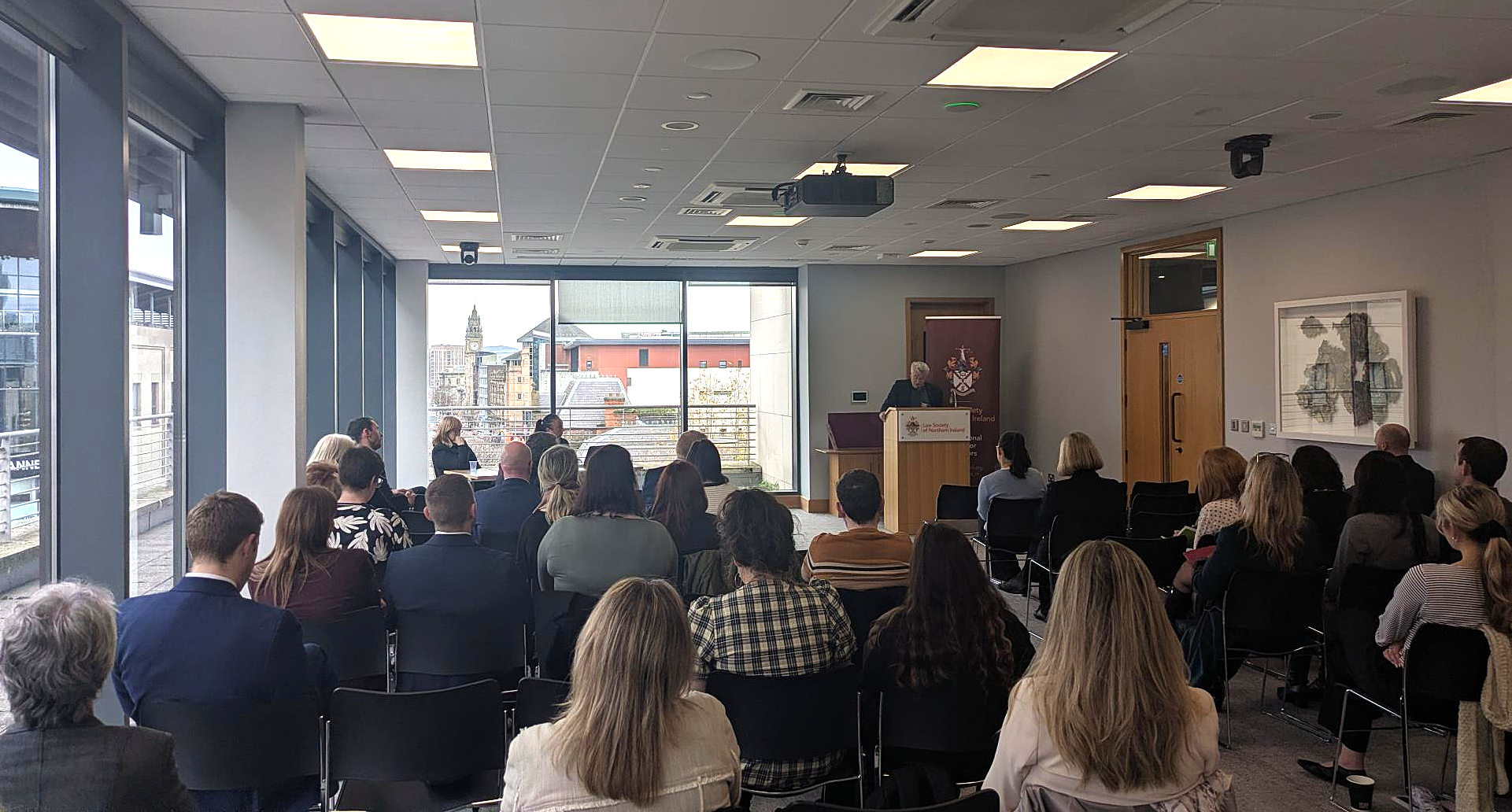
The Law Society of Northern Ireland has marked the 25th anniversary of the Human Rights Act, now “an integral part of the legal fabric in Northern Ireland”.

An event at Law Society House last week brought together legal professionals and wider stakeholders across the jurisdiction, to reflect on the 1998 Act’s impact and continuing importance.

In opening remarks, the Society’s junior vice president, Mark Borland, said the Act had played a key role in Northern Ireland in “shaping decisions across many areas of law, embedding a culture of rights, and helping to promote fairness, dignity and respect for all”.

Alyson Kilpatrick, chief commissioner of the Northern Ireland Human Rights Commission, delivered the keynote address.

She said: “As we mark 25 years of the Human Rights Act, we celebrate a framework that has transformed rights protection into practical reality. Human rights require public authorities to treat everyone the same way regardless of background or status.

“This achievement depends on an independent legal profession—ready to advise, challenge, and uphold principles even against power and popular opinion. This commitment ensures that human rights remain above politics, safeguarding life and rights protections for everyone in Northern Ireland.”

Lorraine Keown, chair of the Law Society’s human rights and equality committee, chaired the event, which also heard from solicitors and academics.

Dr Conall Mallory, co-director of QUB’s Human Rights Centre, reflected on the past, present and future of the Human Rights Act in Northern Ireland, drawing on debates from Parliament and considering some of the most influential cases arising under the Act. 

The final contribution was made by Les Allamby, who considered the relationship between Parliament, the UK Supreme Court and the European Court of Human Rights and cited various examples of how the Human Rights Act and European Convention rights have made tangible differences to people’s lives. 

While celebrating the achievements and particular significance of the Human Rights Act in Northern Ireland, speakers also acknowledged the continuing challenges facing the protection of human rights in an evolving society and amidst wider changing public rhetoric, highlighting the need to continuously adopt and not be complacent in this area. 

A&L Goodbody renews partnership with NI Cyber

A&L Goodbody renews partnership with NI Cyber

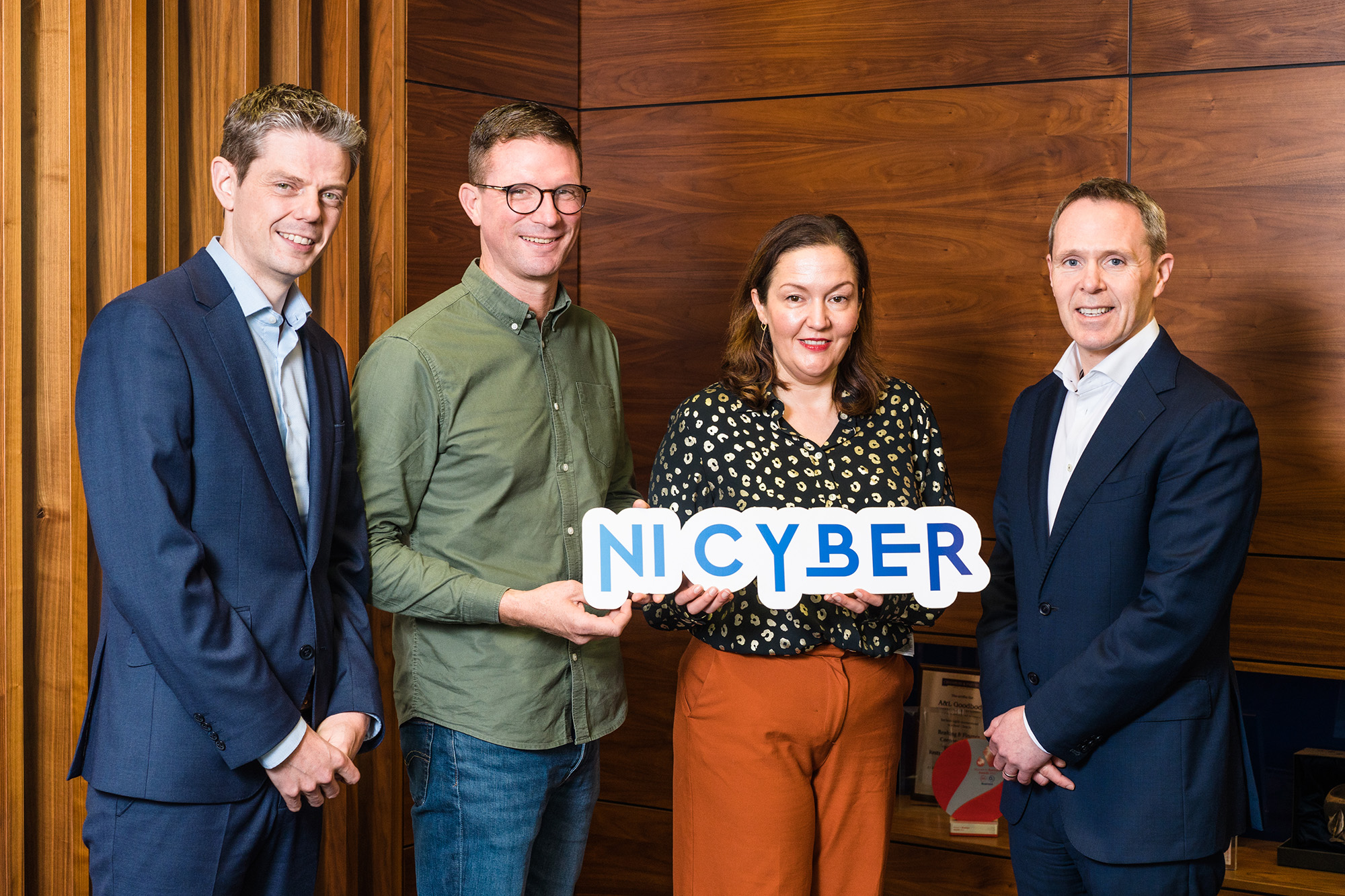
Pictured: ALG senior associate Keith Dunn (far left) and head of office Michael Neill (far right) with NI Cyber chair Simon Whittaker (middle left) and cluster manager Joanne English (middle right).

A&L Goodbody has renewed a strategic partnership with the Northern Ireland Cyber Security Cluster for a further year.

Since first partnering in 2024, ALG and NI Cyber have worked closely to deliver a series of workshops and events aimed at helping Northern Ireland’s businesses and organisations navigate the complex and evolving cyber and data regulatory landscape.

The renewed partnership will build on this momentum, with further in-person and online sessions planned throughout 2025 and 2026 to help firms strengthen their legal readiness in the face of increasing cyber risk.

Michael Neill, head of office at A&L Goodbody Northern Ireland, said: “We’re delighted to continue our partnership with NI Cyber.

“The work the cluster is doing to build collaboration, capability and awareness across Northern Ireland’s cyber sector is vital.

“As legal partners, we’re committed to supporting that effort by sharing insights on the regulatory and legal frameworks that underpin cyber resilience and data protection.”

Simon Whittaker, chair of NI Cyber, added: “A&L Goodbody’s support has been instrumental in helping us grow our membership and deliver high-quality, practical events for the cyber community.

“Their legal expertise adds real value to our members, helping them stay ahead of compliance requirements and emerging risks.

“We’re pleased to continue this partnership for another year.”

Scotland’s abortion laws ‘not fit for purpose’

Scotland's abortion laws 'not fit for purpose'

Scotland’s abortion laws are “not fit for purpose”, according to an expert group appointed by the Scottish government, which has called for legal recognition for a woman’s right to choose.

Under the Abortion Act 1967, which applies across Great Britain, an abortion is only legal before 24 weeks after two doctors have agreed that certain grounds have been met — such as a risk to the mother’s physical or mental health.

The independent report recommends that these grounds be dropped, and that doctors’ agreement should only be required for late-term abortions — those after 24 weeks.

The Scottish government said it would carefully examine the proposals from the abortion law expert group, chaired by Professor Anna Glasier.

The current system requiring approval from two doctors was “anachronistic, paternalistic and failed to reflect best modern practice”, it said.

It stated: “The group agreed unanimously that current Scottish abortion law is not fit for purpose and that alternative models should be considered.

“Legal recognition should be given to the woman’s right to make their own decision regarding whether to continue or to end a pregnancy, and that abortion should become available on request, at least within gestational limits.”

After 24 weeks, an abortion may only be undertaken in very limited circumstances, such as to save the life of the mother or if the foetus has a fatal anomaly.

Professor Glasier said: “The group worked incredibly hard, and benefited greatly from the input and expertise of a wide range of stakeholders, to develop evidence-based, balanced recommendations.

“The report demonstrates the group’s view that it is time for an abortion law that reflects the reality of current clinical practice where abortions are safely provided in the best interests of women.”

Scotland’s health minister, Jenni Minto, said: “I thank Professor Glasier and all the members of the Expert Group for their work and for their robust consideration of current clinical practice and research. I also welcome the time they have taken to consider a broad range of views from stakeholders across Scotland.

“It is right that we continue to ensure that abortion is treated as a healthcare matter and that women are supported to access safe and timely abortion services.”

From shuttle to shambles: a cautionary tale in Zaloumis vs Steele

From shuttle to shambles: a cautionary tale in Zaloumis vs Steele

The recent English and Welsh High Court case of Zaloumis v Steele (King’s Bench Division) is a cautionary tale for mediators and one worth the attention of lawyers who find themselves advising clients through settlement processes.

The dispute involved a son and father falling out over business ventures and family finances. 

After an apparently successful mediation, a settlement agreement was signed. The father agreed to pay £200,000, but payment was late, instalments were made instead, and the son claimed losses exceeding £1.4 million as a result.

The claimant argued that he had told the mediator, in private session, that timely payment was essential, and that the mediator had been authorised to communicate this to the defendant. This led to the mediator’s emails, WhatsApps and phone records being scrutinised in court, a stark reminder that ‘confidentiality’ is not always a shield. 

The judgment raised several red flags for practitioners:

  • Shuttle as risk, not refuge. By acting as messenger rather than facilitator, the mediator became entangled in a “he said / she said” dispute over what was conveyed.

  • Settlement agreements need clarity. Conflicting dates, vague terms, and no consistent signing process created fertile ground for litigation.

  • Process discipline matters. The mediation agreement itself appeared not to have been signed by both parties — a basic oversight with potentially serious consequences.

  • Confidentiality has limits. While private sessions remain protected, written communications can and do make their way into court.

For lawyers, the lesson is that advising clients to “just mediate it” is not enough. 

Settlement agreements reached in mediation need the same forensic care you would bring to any binding contract. For mediators, the case underlines the importance of structure, process, and professional vigilance, even when shuttle feels like the safer option.

It is no accident that mediation practice and ethics are increasingly under the spotlight in England and Wales and Ireland. 

With the growth of mediation in employment and commercial disputes, cases like Zaloumis v Steele will not remain rare. They underline the need for trained mediators who can balance flexibility with procedural rigour and for lawyers who truly understand what good mediation looks like.

That’s why in January, in Dublin, we are running our Accredited Mediation Training Course: five intensive days designed to give legal professionals both the practical tools and the ethical frameworks to mediate effectively and confidently.

Because in mediation, as this case shows, the devil really is in the detail.

For more information visit MediatorAcademy.com

And finally… hacked off

And finally... hacked off

Prison officials have caught an inmate who hacked into prison computers to change prisoners’ sentences and bank balances.

The unnamed prisoner in Târgu Jiu, in southern Romania, was caught by the prison accounting department after a suspicious level of spending, Romania Insider reports.

An investigation found that he had access to the prison computer system for months, thanks to help from a rogue prison officer.

In scenes resembling a 1980s teen movie, the man modified sentences, detention conditions and other rights for 15 inmates of other prisons.

He also adjusted his own sentence, visitation schedule and bank balance, as well as those of other inmates in his prison.

A number of prison officers have been disciplined and senior management replaced following the incident.

In Case You Missed It...

Please note that Irish Legal News accepts no responsibility for viruses. It's your responsibility to scan attachments.

Irish Legal News strives to be accurate. If you see anything in our publication which is misleading or wrong, please contact us.

You can find the most up-to-date information about how to contact Irish Legal News on our website.

© Irish Legal News Ltd 2026
You are receiving this email because you are subscribed to Irish Legal News.