Is this email not displaying correctly? View it in your browser.
24th November 2025
The only all-Ireland daily news service for lawyers
Jobs At A Glance

Get your legal job vacancies listed on Irish Legal News by contacting our advertising manager, Jeff Anderson, on jeff@irishlegal.com.

You can download the Irish Legal News media pack from our website.

Today’s Headlines
Jobs

Remote Clinical Negligence Solicitor

Location: Remote Gary Matthews Solicitors

Hours: Full-Time
Salary: Dependant on experience
Location: Remote

About the Role:

Due to continued growth we are looking for an experienced Senior Solicitor to join our team working from home for our remote firm. You will be engaged in challenging and rewarding, high value casework as you represent clients who are victims of clinical negligence.

The opportunity will suit an experienced and compassionate Senior Solicitor with an experienced background of representing Plaintiff clients in clinical negligence cases, proven by a strong track record of running complex cases. You will be handling a diverse and varied caseload of clinical negligence claims to include surgical error and complications, misdiagnosis and delayed diagnosis cases, including those involving cancer. Therefore you must have a natural ability to provide legal services with a personal and empathic touch, demonstrating your care, understanding and sensitivity to clients who may have suffered negligence.

You will run a high value caseload from initial instructions to trial. You will therefore need to have a thorough working knowledge and understanding of the issues involved in dealing with such cases, such as court procedures, the litigation process and legal costs. The ideal candidate will also play an important role in helping to achieve the clinical negligence team’s objectives.

Key Responsibilities:

  • Manage a busy and diverse workload.
  • Handle a wide range of complex clinical negligence cases.
  • Provide excellent client care and maintain strong client relationships.
  • Work in tandem with Principal and Clinical Negligence Team to service existing client base and continue the growth of the Firm.

Skills and Requirements:

  • A minimum of 5 years’ experience in plaintiff clinical negligence cases.
  • Excellent communication and interpersonal skills.
  • Ability to build rapport and foster good client relations through a compassionate and understanding approach.
  • Self-motivated and target driven with the ability to work independently and as part of a team.
  • Experience of handling own client list.
  • Enthusiastic and motivated approach to work.
  • Proficient in Microsoft Office Suite and legal case management systems.
  • Well-versed in virtual communication tools such as Teams, Zoom and Google Meet.

Email CV & Covering Letter to email@gary.ie

Closing date for applications is 5pm 20th December 2025

Latest News

High Court: €30,000 general damages awarded for psychiatric injury from minor car accident

By Gillian O'Hanlon BL, case reporter

High Court: €30,000 general damages awarded for psychiatric injury from minor car accident

The High Court has awarded €65,000 in general damages, including €30,000 for psychiatric injury, to the victim of a minor rear-ending accident.

Delivering judgment for the High Court, Mr Justice Cian Ferriter determined that notwithstanding the court’s finding that the plaintiff had overstated her symptoms, an award of €60,000 for the plaintiff’s PTSD, discounted by 50 per cent for external contributing and exacerbating factors not attributable to the accident, was appropriate.

Background

In December 2017, the plaintiff was stopped at a red traffic light in Finglas, Co Dublin. When the lights changed, the plaintiff’s vehicle began to move off and was rear-ended by the defendant’s vehicle. The plaintiff was wearing a seatbelt and the airbags of her vehicle did not deploy.

Later that day, the plaintiff felt unwell and attended CareDoc. She was referred to a hospital the following day, where she was diagnosed with soft tissue injuries to her neck, shoulder and right arm.

The plaintiff alleged that she took seven weeks’ sick leave from her job as a pharmacy assistant and found work difficult upon her return due to her injuries. She further complained that she experienced inter alia anxiety, flashbacks to the accident and sleep disturbance.

The plaintiff’s employment was terminated at the end of December 2021 and she began to receive invalidity pension from September 2022. The plaintiff did not work since then, and she and her daughter were made homeless in March 2023.

The plaintiff had also experienced a number of difficult years prior to the accident, having lost her parents and having experienced difficulties with a colleague which led her to require medication for anxiety and depression. Notwithstanding, the plaintiff alleged that she was not experiencing any mental health difficulties at the time of the accident.

The plaintiff’s case came before the High Court on an assessment-only basis. Although the defendant’s insurers accepted liability for the accident, a question arose as to whether the defendant could be held liable for PTSD alleged to have resulted from the accident and if so, the extent to which the plaintiff’s ongoing physical and psychological symptoms were properly referable to the accident.

The defendant argued that the accident was not causative of the plaintiff’s mental health problems and that same were in existence at the time of the accident, relying on the fact that the claim was introduced very belatedly into the plaintiff’s case and that she improperly failed to disclose relevant prior mental health history until shortly before the hearing.

The High Court

Mr Justice Ferriter noted that the plaintiff’s failure to disclose her prior mental health history was “distinctly unimpressive” and that she was “inclined to overstate the severity of her symptoms”.

The judge explained that the suppression of the plaintiff’s relevant medical history supported the view that “she was of a mindset to put forward the worst of her mental health experiences in particular as entirely attributable to the accident” and noted that she had attended a gym for up to a year post-accident, which in the court’s view “was inconsistent with the level of physical discomfort she was complaining of at that time”.

Nonetheless, “even allowing for a margin of exaggeration by the plaintiff of her symptoms”, the court was satisfied from the medical evidence tendered that the plaintiff was no longer suffering from anxiety and depression at the time of the accident.

Mr Justice Ferriter considered that while the plaintiff was undoubtedly a poor candidate for the accident in terms of her psychological vulnerability, the “eggshell skull” rule required the defendant to take the plaintiff as he found her.

As to the defendant’s contention that the plaintiff could not recover for her “nervous shock” type symptoms where she was not exposed to any actual or threatened death of serious injury and where the event could not objectively be described as a terrifying or horrifying event, the court was satisfied that the plaintiff met the requirements of Kelly v Hennessy [1995] 3 IR 253.

The court explained “as some form of personal injury was foreseeable arising from the accident, the defendant cannot escape liability simply because the injuries in fact sustained (physical and mental) were much more significant than might reasonably have been expected”.

The judge was further satisfied that the test of causation was satisfied, in that the plaintiff would not have suffered symptoms consistent with PTSD from January 2018 onwards but for the accident, but that a range of external factors not properly referable to the accident contributed to the length and severity of her mental health symptoms.

In particular, the court considered that the plaintiff’s move from Tullow to Carlow at the end of 2019, the Covid-19 pandemic, her involvement in family law litigation which did not conclude until 2020, and her falling into rent arrears coupled with her landlord’s decision to sell her rented accommodation leading to her becoming homeless in 2023 were all factors leading to a significant deterioration in her condition.

Accordingly, the court concluded that damages would fall to be assessed on the basis that 50 per cent of the plaintiff’s psychiatric symptoms in the period from the accident to trial were attributable to the accident itself.

Having regard to the relevant case law on the principles applying to awards of damages in personal injuries cases and on the approach to multiple injuries cases, Mr Justice Ferriter determined that the plaintiff’s psychiatric injury was the most significant and assessed damages on a “pre-Guidelines basis” at €50,000 for past suffering and €10,000 for future suffering.

Having discounted that figure to €30,000 to take into account the contributing and exacerbating external factors not attributable to the accident, the court uplifted that figure by €35,000 for the plaintiff’s neck, shoulder and back injuries.

Conclusion

Accordingly, the High Court awarded the plaintiff €65,000 in general damages, together with special damages and loss of earnings already agreed at €25,000.

Sykula v O’Reilly [2025] IEHC 638 

BHSM LLP and OBH Partners to merge next month

BHSM LLP and OBH Partners to merge next month

Pictured: BHSM managing partner Mark Homan (left) and OBH founding partner June Hynes (right).

Corporate law firms BHSM LLP and OBH Partners have announced a strategic merger taking effect from next week.

The new firm will be known as BHSM LLP incorporating OBH Partners and will comprise 70 legal professionals, including 40 solicitors.

It will continue to be headquartered at BHSM’s office at 76 Baggot Street Lower, Dublin 2, and Mark Homan will continue as managing partner of the merged firm.

June Hynes and Orlaith O’Brien, founding partners of OBH Partners, will work closely with Mr Homan through the merged firm’s next phase of development.

Mr Homan said: “This merger brings together two firms with aligned cultures and a shared ambition to deliver exceptional legal service.

“It marks an exciting next chapter as we combine the talent and experience of both teams under a single, Irish-owned banner, which is becoming a unique feature in this market.”

Ms Hynes added: “The merger between our two established and well-respected law firms allows this new entity to strengthen and expand the service offering, providing expert advice to a combined client base while creating significant potential for future growth.

“This partnership reinforces our shared commitment to excellence, collaboration, and client success.”

William Fry recruits Jason Milne as head of environment and planning

William Fry recruits Jason Milne as head of environment and planning

Pictured: William Fry managing partner Stephen Keogh (left), environment and planning head Jason Milne (centre) and chairperson Liam McCabe (right).

William Fry has appointed Jason Milne as partner and head of the firm’s environment and planning group.

Mr Milne brings over 25 years’ specialist expertise in environmental, planning, and health and safety law.

He joins William Fry from A&L Goodbody, where he served as partner for more than seven years.

His career combines legal expertise with practical industry knowledge, having started out as an environmental consultant before transitioning to law.

Mr Milne has advised clients across diverse sectors including energy, pharma, manufacturing and real estate, guiding them through complex issues such as environmental impact assessment (EIA), judicial reviews, regulatory prosecutions and commercial litigation.

His technical background enables him to deliver commercially focused advice that helps clients anticipate risk, ensure regulatory compliance and deliver complex projects with confidence.

He regularly advises on environmental and regulatory risk in M&A, capital markets, project finance and real estate transactions, as well as planning and environmental aspects of major energy and infrastructure projects.

Stephen Keogh, managing partner at William Fry, said: “We are delighted to welcome Jason to William Fry. His depth of experience and practical approach to environmental and planning law will be a tremendous asset to our clients.

“Jason’s expertise further strengthens our ability to deliver market-leading advice in this critical area. We look forward to working with Jason and leveraging his knowledge to benefit our clients.”

Mr Milne added: “I’m excited to join William Fry at a pivotal time for environmental and planning law in Ireland.

“With major legislative reforms underway and growing emphasis on climate objectives, businesses need strategic, practical guidance to deliver sustainable development while managing regulatory risk.

“I look forward to working with the talented team at William Fry to provide that support.”

Bowe O’Brien to join Parker Law Solicitors in Waterford legal merger

Bowe O'Brien to join Parker Law Solicitors in Waterford legal merger

Pictured: Suzanne Parker, Aisling Irish and Morette Kinsella from Parker Law Solicitors with Helen O’Brien from Bowe O’Brien Solicitors.

Waterford firms Bowe O’Brien Solicitors and Parker Law are to join forces through a merger next week.

The merger between Bowe O’Brien, a boutique private client and commercial law firm, and Parker Law, a general practice firm, will take effect from 1 December 2025.

Helen Bowe O’Brien, principal solicitor of Bowe O’Brien Solicitors, said: “We are excited about this merger with Parker Law Solicitors, which allows us to bring a broader range of services and depth of valuable support to our clients.

“This merger ensures the continuity of tailored legal services to our valued clients who expect high-quality delivery.”

Suzanne Parker, principal solicitor of Parker Law, said: “We welcome Helen and her wonderful staff into the Parker Law family.

“Together, we can offer a broader spectrum of services and leverage our combined expertise to better serve our existing, new and future clients.”

A&L Goodbody welcomes six NQs in Northern Ireland

A&L Goodbody welcomes six NQs in Northern Ireland

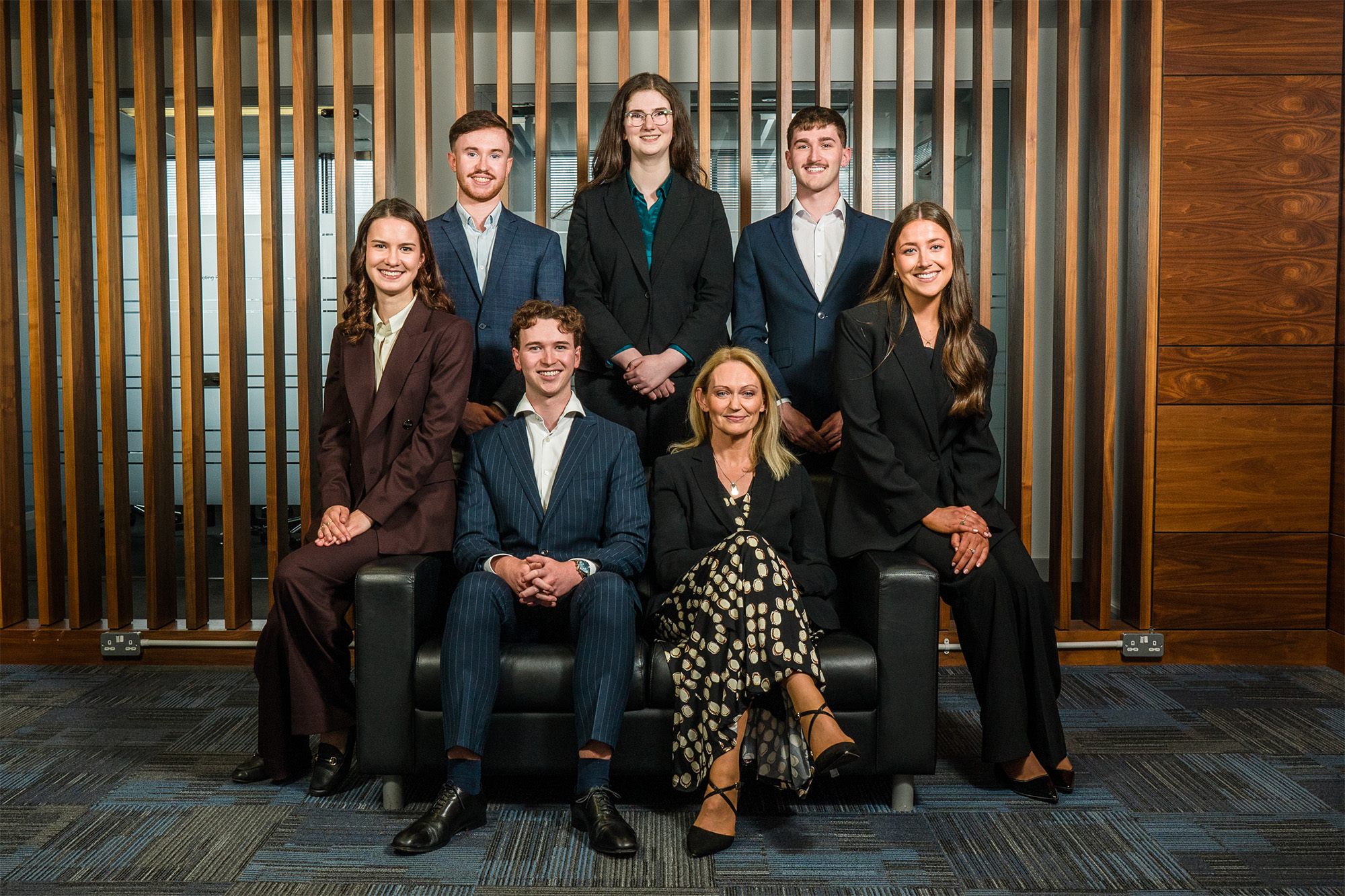
Pictured: Martyn Doherty, Holly Molloy and Luca StClair (standing) with Catherine Sheppard, Niall O’Hare, Shirley Blair and Holly Emerson (sitting).

A&L Goodbody has welcomed newly-qualified solicitors Catherine Sheppard, Holly Emerson, Holly Molloy, Luca StClair, Martyn Doherty and Niall O’Hare to its Northern Ireland team.

The six join the firm following their completion of its trainee solicitor programme, bringing the headcount in Belfast to more than 140 lawyers and business services professionals.

Mr Doherty and Mr O’Hare join ALG’s litigation department, while Ms Emerson strengthens the property team. Ms Sheppard and Ms StClair take up roles within the corporate team, with Ms Molloy joining banking.

Shirley Blair, of counsel at ALG in Northern Ireland, said: “Nurturing the next generation of legal talent is a core priority for the firm.

“Our newly-qualified solicitors bring exceptional capability, fresh perspectives and real ambition to their practice areas.

“Each member of this cohort represents the future of ALG in Northern Ireland, and we are delighted to welcome them into their new roles.”

Darragh Mackin and Gavin Booth to receive €823,500 payout for defamation

Darragh Mackin and Gavin Booth to receive €823,500 payout for defamation

Darragh Mackin and Gavin Booth

Northern Ireland lawyers Darragh Mackin and Gavin Booth will each receive more than €410,000 in damages after being defamed by businessman Denis O’Brien and his spokesperson, James Morrissey.

A High Court jury in Dublin found on Friday that Mr Mackin and Mr Booth were defamed in a press release issued in October 2016 in relation to a report they prepared on media ownership in Ireland.

Both lawyers, now of Belfast firm Phoenix Law, will receive around €411,750, including €270,000 in general damages and just under €142,000 in aggravated damages, according to RTÉ News.

In a statement, Johnsons Solicitors, which represented the two lawyers, said the press release at the centre of the proceedings “advanced serious and entirely baseless defamatory allegations against our clients” which “had no foundation whatsoever”.

The statement added: “The jury’s award of substantial damages, together with aggravated damages, delivers a public vindication of our clients’ reputation and professional standing.

“This outcome underscores the gravity of the defamatory allegations and reaffirms that such unfounded attacks on individuals who serve the justice system should not be tolerated.”

Irish asylum plans ‘will undermine refugee integration’

Irish asylum plans 'will undermine refugee integration'

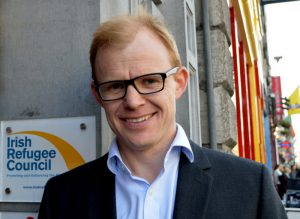
Nick Henderson

Irish government plans to follow the UK in making it harder for refugees to secure permanent settlement are “deeply alarming”, the Irish Refugee Council has said.

Ministers will this week decide how to respond to sweeping changes announced by the UK government, which claims the UK system is too generous compared to other European nations.

Jim O’Callaghan has said he is “committed to ensuring that Ireland is not viewed more favourably than the UK by those seeking to claim asylum”.

Speaking at the G20 summit in South Africa, Taoiseach Micheál Martin hinted at changes to citizenship and family reunification applications, with welfare payments and debts to the State to be taken into account.

Irish Refugee Council CEO Nick Henderson said the proposed changes “severely undercut two key pillars of refugee integration: a clear route to citizenship and the ability to reunite with family” and would harm integration.

“If adopted, these policies will keep families apart — separating children from their parents and separating partners, leaving loved ones languishing in their countries potentially also at risk of persecution,” he said.

“They will also actively undermine refugees’ ability to build stable lives in Ireland, keeping people who have already been found to be at risk of persecution in a permanent second-class status.”

He continued: “According to the reports, to be reunited with their family, people will now have to find accommodation in an already stretched rental market, prove they have the means to rent it, and then wait for their application to be processed, which currently takes a year and a half.

“This mirrors a requirement in the recent Afghan admissions programme that simply did not work and pushed people into extremely difficult situations.

“The reported proposal that a person can only have received State support for four months out of five years is bizarre.

“Under this rule, a refugee seeking citizenship would be forced to avoid all social supports — regardless of ill health, disability, pregnancy, sudden job loss or any other legitimate need. It is deeply irresponsible to put people in such a position.”

Mr Henderson concluded: “Ireland is a republic, founded — at least in principle — on respect for human rights.

“We face a choice: follow the UK down a retrograde path, or stand firm and defend the values we claim to hold including that families should be together and people who are here as refugees can build their lives and be independent.”

Legal threat over inaction on Northern Ireland historical clerical child abuse

Legal threat over inaction on Northern Ireland historical clerical child abuse

Legal proceedings could be brought against the Northern Ireland Executive over its failure to respond to a report backing a public inquiry into clerical sexual abuse.

No decisions have yet been taken in response to the recommendations in the report, which was submitted in July but has yet to be published.

Belfast firm KRW LAW LLP said it has been instructed to issue formal pre-action protocol correspondence to the Office of the First and Deputy First Minister (OFMDFM) on behalf of members of the reference group on historical clerical child abuse.

In a statement on Friday, the law firm said the move “reflects the growing frustration among survivors at the lack of progress and the need to ensure accountability through all available legal channels”.

It has called for the immediate implementation of all recommendations without further delay, and direct engagement between OFMDFM and survivors to restore trust and ensure accountability.

Amnesty International also said it has written to the first minister and deputy first minister in support of calls for a public inquiry.

Patrick Corrigan, Northern Ireland director of Amnesty International, is himself a member of the reference group.

“After years of work, a report bringing together findings of three separate research projects into clerical child abuse has been with the first and deputy first minister since July,” Mr Corrigan said last week.

“Victims and survivors, who courageously shared their stories of abuse with researchers appointed by the Executive, are now frustrated at the lack of political action.

“The report contains clear recommendations — agreed by all the victims, researchers and officials involved — including safeguarding measures and a public inquiry into failings by church and state. We must learn from past mistakes, or we will be doomed to repeat them.

“The recent revelations from the Presbyterian Church in Ireland show that clerical abuse and catastrophic safeguarding failures in faith settings are not historic issues but are very real current concerns that continue to put children at risk.

“We are asking Michelle O’Neill and Emma Little-Pengelly to act on these recommendations without delay and to work directly with victims and survivors on how they will be implemented.”

Ireland in breach of EU water protection rules

Ireland in breach of EU water protection rules

Credit: CJEU

Ireland is in breach of its obligations under EU water protection law, the Court of Justice of the European Union (CJEU) has ruled.

In a judgment handed down last Thursday, the court identified serious non-compliances with the EU Water Framework Directive (WFD), introduced in 2000.

These include a failure to provide adequate controls on water abstraction and a failure to put in place a regulatory framework to prevent physical damage to Irish waterways.

The Sustainable Water Network (SWAN), a network of 25 environmental organisations, has welcomed the ruling.

Sinéad O Brien, SWAN CEO, said: “After years of warnings, this ruling is a national embarrassment. The government has had 25 years since this law came into force — it must now act urgently to put this right.

“It must show that it is actually committed to safeguarding our rivers, lakes and seas, and our priceless water wildlife, by meeting its obligations under EU law.

“It must reduce the threshold for abstraction and introduce further robust abstraction monitoring and controls to protect our water resources for now and into the future.

“It’s now high time for the government to deliver much stronger measures in all areas affecting water quality to meet the main objective of the WFD overall, restoring all our waterbodies to good health.

“Current measures are only continuing to lead us on a path in the wrong direction, as shown by the EPA in its latest water quality report.

“The alternative to taking these actions is more declines in the health of our waters and daily fines from the EU — neither of which we can afford.”

Housing, local government and heritage minister James Browne told Agriland that the government “will respond to this judgment swiftly with positive and constructive actions in order to bring Ireland into full compliance”.

His department “will put in place a work programme to review the Irish statute book to identify any necessary amendments and to address all outstanding matters identified in this judgment”, the minister added.

Wilson Nesbitt commits to carbon emission reductions

Wilson Nesbitt commits to carbon emission reductions

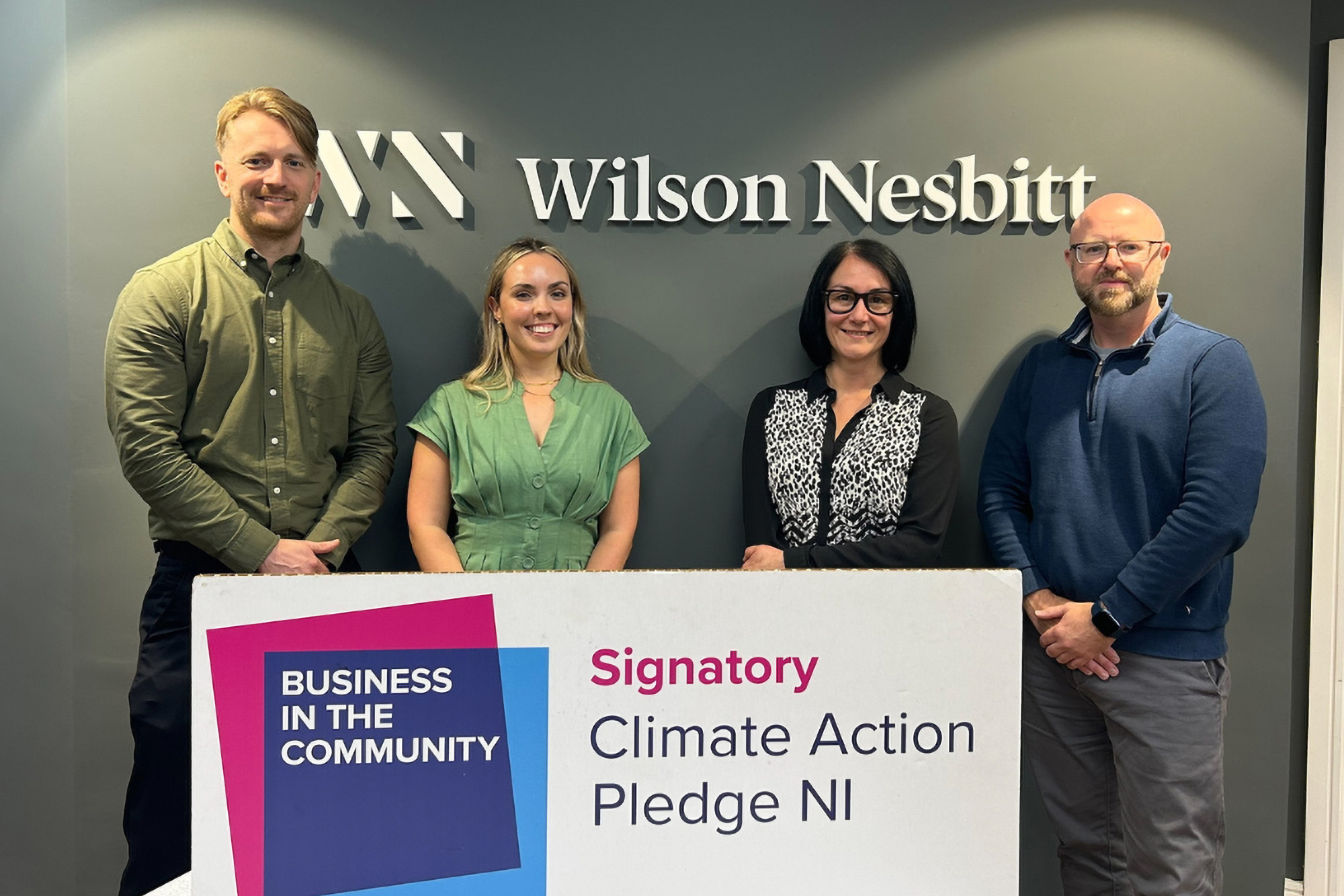
Pictured: Traci Adams, environmental advisor at Business in the Community NI (centre left), with Wilson Nesbitt IT support executive Harry Thrush, chief operating officer Adele Summers and partner Ian Creighton.

Northern Ireland firm Wilson Nesbitt has committed to a 50 per cent reduction in carbon emissions by 2030 and a 100 per cent reduction by 2050.

The law firm is the latest signatory to Business in the Community NI’s climate action pledge, designed to encourage organisations to commit to reducing their carbon emissions.

The pledge is one of several recent measures taken by Wilson Nesbitt to embed sustainability and environmentally friendly practices into its business operations, having launched a new environmental, sustainability and net zero plan as well as setting up a dedicated sustainability steering group.

In addition, four of the firm’s employees have recently received carbon literacy training as part of BITC NI’s climate action programme, which was facilitated and funded by the Law Society of Northern Ireland.

Adele Summers, chief operating officer at Wilson Nesbitt, said: “Signing the climate action pledge has enabled us to set an ambitious yet achievable target towards significantly reducing our emissions and develop a clear understanding of our carbon footprint as an organisation.

“We are grateful to the Law Society of Northern Ireland for facilitating our participation in the climate action programme and to BITC NI, whose training and support has been invaluable in helping us to understand our impact and develop our sustainability strategy.

“We are very excited to take this significant step forward towards becoming a greener business and would strongly encourage other organisations to consider signing the climate action pledge.”

Blinne Ní Ghrálaigh KC to be named IWLA Woman Lawyer of the Year

Blinne Ní Ghrálaigh KC to be named IWLA Woman Lawyer of the Year

Blinne Ní Ghrálaigh

Blinne Ní Ghrálaigh KC is to be recognised by the Irish Women Lawyers Association (IWLA) as Woman Lawyer of the Year.

The award will be presented to Ms Ní Ghrálaigh at the association’s annual gala, taking place at the Law Society of Ireland on 13 December.

Ms Ní Ghrálaigh is a senior barrister with Matrix Chambers in London. She is called to the bars of England and Wales and both jurisdictions on the island of Ireland.

A specialist in international law and human rights, she rose to global prominence when she appeared before the International Court of Justice (ICJ) on behalf of South Africa in its high-profile proceedings alleging acts of genocide by Israel in Gaza.

She recently appeared before the court again on behalf of the State of Palestine in proceedings relating to Israel’s obligations to allow humanitarian aid into Gaza.

Much of her practice before domestic courts focuses on justice and accountability for victims of state violence, including victims of the Troubles, and on the protection of the rights to free speech and protest.

Ms Ní Ghrálaigh’s recent notable work in the UK includes the Kneecap terrorism trial, the challenge to the UK’s proscription of Palestine Action, the Bloody Sunday inquiry, and litigation by the Hooded Men.

She was featured in Irish Legal News as Lawyer of the Month in February 2022 after successfully defending one of the ‘Colston Four’ acquitted of criminal damage for toppling a statue of slave trader Edward Colston in Bristol.

She also intervened on behalf of Conradh na Gaeilge in the Keane family’s successful challenge to the refusal to permit an untranslated Irish language inscription on their mother’s headstone in Coventry.

Ms Ní Ghrálaigh is a former vice-chair of the Bar Human Rights Committee (BHRC) in England and Wales.

She is an adjunct professor at University College Cork, University College Dublin and the University of Galway, and is a former visiting fellow at Harvard Law School.

In a statement, the IWLA said: “This honour recognises an outstanding legal professional whose dedication, leadership, and commitment to rule of law and defence of human rights exemplify the highest standards of our profession.

“We congratulate Ms Ní Ghrálaigh on this well-deserved achievement and thank her for her exceptional contributions to the legal community.”

AI: Clifford Chance cuts 10 per cent of London business service roles

AI: Clifford Chance cuts 10 per cent of London business service roles

Clifford Chance is cutting around 10 per cent of its business services staff in London, with the firm citing increased use of AI and shifting operational demands as key drivers.

About 50 roles across finance, HR and IT are expected to be made redundant, with a further 35 roles potentially re-scoped or reorganised, according to the Financial Times. The firm is also shifting more support work to its global hubs in Poland and India.

A spokesperson for Clifford Chance said: “In line with our strategy to strengthen our operations, we can confirm we are proposing changes to some of our London-based business professional functions.

“The proposed changes could see the creation of new roles, changes to the scope of roles, revised team structures and in some cases a reduction in roles.”

The move comes as large professional services firms increasingly acknowledge that AI is reshaping workforce planning.

PwC’s global chairman, Mohamed Kande, said the firm would not meet its previous goal of hiring 100,000 staff over five years, pointing to AI as a key factor reducing demand for entry-level roles.

“When we made the plans to hire that many people, the world looked very, very different,” he told the BBC. “Now we have artificial intelligence. We want to hire, but I don’t know if it’s going to be the same level of people that we hire — it will be a different set of people.”

However, Mr Kande added that PwC was having difficulty in recruiting AI specialists. “We are looking for hundreds and hundreds of engineers today to help us drive our AI agenda, but we just cannot find them,” he said.

From shuttle to shambles: a cautionary tale in Zaloumis vs Steele

From shuttle to shambles: a cautionary tale in Zaloumis vs Steele

The recent English and Welsh High Court case of Zaloumis v Steele (King’s Bench Division) is a cautionary tale for mediators and one worth the attention of lawyers who find themselves advising clients through settlement processes.

The dispute involved a son and father falling out over business ventures and family finances. 

After an apparently successful mediation, a settlement agreement was signed. The father agreed to pay £200,000, but payment was late, instalments were made instead, and the son claimed losses exceeding £1.4 million as a result.

The claimant argued that he had told the mediator, in private session, that timely payment was essential, and that the mediator had been authorised to communicate this to the defendant. This led to the mediator’s emails, WhatsApps and phone records being scrutinised in court, a stark reminder that ‘confidentiality’ is not always a shield. 

The judgment raised several red flags for practitioners:

  • Shuttle as risk, not refuge. By acting as messenger rather than facilitator, the mediator became entangled in a “he said / she said” dispute over what was conveyed.

  • Settlement agreements need clarity. Conflicting dates, vague terms, and no consistent signing process created fertile ground for litigation.

  • Process discipline matters. The mediation agreement itself appeared not to have been signed by both parties — a basic oversight with potentially serious consequences.

  • Confidentiality has limits. While private sessions remain protected, written communications can and do make their way into court.

For lawyers, the lesson is that advising clients to “just mediate it” is not enough. 

Settlement agreements reached in mediation need the same forensic care you would bring to any binding contract. For mediators, the case underlines the importance of structure, process, and professional vigilance, even when shuttle feels like the safer option.

It is no accident that mediation practice and ethics are increasingly under the spotlight in England and Wales and Ireland. 

With the growth of mediation in employment and commercial disputes, cases like Zaloumis v Steele will not remain rare. They underline the need for trained mediators who can balance flexibility with procedural rigour and for lawyers who truly understand what good mediation looks like.

That’s why in January, in Dublin, we are running our Accredited Mediation Training Course: five intensive days designed to give legal professionals both the practical tools and the ethical frameworks to mediate effectively and confidently.

Because in mediation, as this case shows, the devil really is in the detail.

For more information visit MediatorAcademy.com

And finally… wig and gown

And finally... wig and gown

An Elvis-loving judge has agreed to resign from the bench after disciplinary action for taking his love of the King too far — including by wearing an Elvis wig in court.

Judge Matthew Thornhill, from Missouri, said he was trying to “help relax litigants” through his light-hearted antics, but now appreciated that they “could affect the integrity and solemnity of the proceedings”, the BBC reports.

A disciplinary report said the judge “would routinely wear an Elvis Presley wig on or about [Halloween]” and would play Elvis songs while litigants or witnesses were being sworn in.

He also made frequent and “irrelevant” references to Elvis in the course of his work, including by quoting Elvis lyrics.

The report recommended that Judge Thornhill be suspended for six months and then be allowed to resume his judicial work for 18 months before retiring.

The judge said the allegations in the report were “substantially accurate” and he accepted the recommendations.

Please note that Irish Legal News accepts no responsibility for viruses. It's your responsibility to scan attachments.

Irish Legal News strives to be accurate. If you see anything in our publication which is misleading or wrong, please contact us.

You can find the most up-to-date information about how to contact Irish Legal News on our website.

© Irish Legal News Ltd 2025
You are receiving this email because you are subscribed to Irish Legal News.